Jack Adapter for Lifted Trucks: Your Essential Guide to Safe and Efficient Vehicle Maintenance
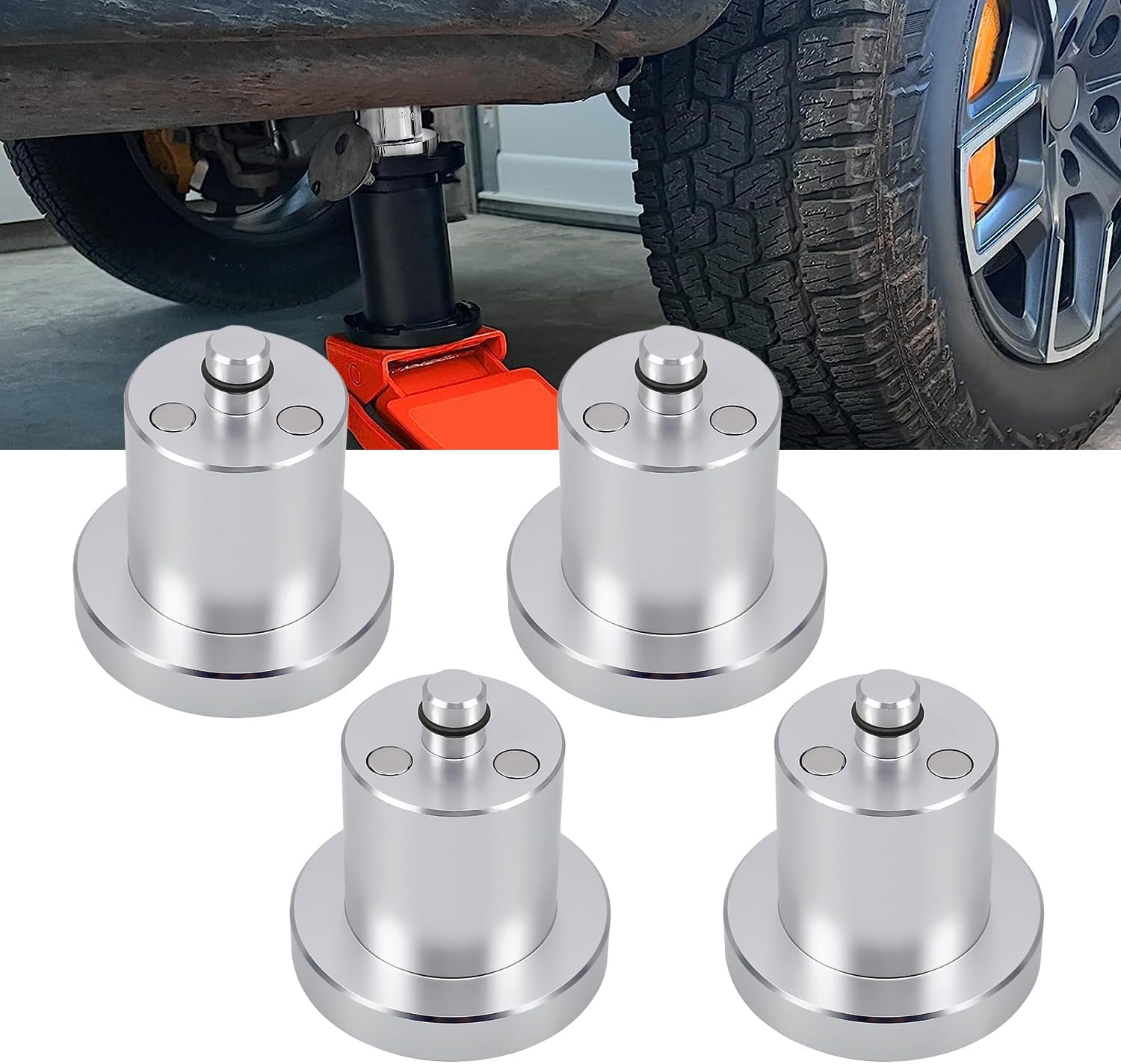
Jack Adapter for Lifted Trucks: Your Essential Guide to Safe and Efficient Vehicle Maintenance
For enthusiasts and owners of lifted trucks, the joy of enhanced off-road capability and a commanding presence on the road is undeniable. However, this increased ground clearance, while advantageous in many scenarios, presents a unique challenge when it comes to routine maintenance or emergency repairs: how do you safely and effectively lift your vehicle? Standard jacks simply fall short, both literally and figuratively. This is where the jack adapter for lifted trucks becomes an indispensable tool.
A jack adapter for lifted trucks is a specialized accessory designed to bridge the gap between your standard hydraulic jack (be it a bottle jack or a floor jack) and the elevated jacking points of your lifted vehicle. It extends the reach, enhances stability, and often provides a more secure contact surface, transforming an otherwise precarious lifting operation into a safe and manageable task. In this comprehensive guide, we will delve into the world of jack adapters, exploring their importance, types, selection criteria, and best practices for safe usage, ensuring that every lifted truck owner can confidently maintain their prized possession.
Understanding the Challenge: Why Standard Jacks Fall Short for Lifted Trucks
Lifted trucks, by their very nature, sit significantly higher off the ground than their factory-spec counterparts. This elevation is achieved through suspension lifts, body lifts, or larger tires, all of which contribute to increased ground clearance. While beneficial for tackling rugged terrain, this modification renders most conventional automotive jacks inadequate.
Standard floor jacks and bottle jacks are engineered with a specific lift range in mind, typically suitable for vehicles with standard ride heights. When attempting to lift a truck with several inches of lift, these jacks often struggle to even reach the frame or axle, let alone lift the tire off the ground sufficiently for work. Even if they can make contact, their maximum lift height might not be enough to clear the larger tires common on lifted vehicles. Furthermore, the small, often flat saddles of standard jacks can be unstable on the rounded surfaces of axles or the sometimes-irregular shapes of reinforced frame points, increasing the risk of slippage and potentially catastrophic accidents. The combination of insufficient reach, limited lift height, and unstable contact points makes using a standard jack on a lifted truck not just inefficient, but inherently dangerous.
What is a Jack Adapter for Lifted Trucks?
A jack adapter for lifted trucks is a specialized accessory that modifies the contact point or extension of a standard jack to make it compatible with the unique requirements of a lifted vehicle. Its primary purpose is to extend the reach of the jack, allowing it to make secure contact with the higher jacking points of a lifted truck, and often to provide a more stable and secure cradle for the vehicle’s frame or axle.
These adapters are typically constructed from robust materials like high-strength steel or durable composites, designed to withstand the immense pressures of lifting heavy vehicles. They come in various forms, each tailored to specific types of jacks and jacking points. By using an adapter, you can leverage your existing jack, saving the expense and space of a dedicated high-lift jack, while significantly improving the safety and efficiency of your lifting operations. It’s an ingenious solution that ensures your jack can effectively and securely engage with your truck’s elevated chassis or suspension components.
Key Benefits of Using a Jack Adapter
Investing in the right jack adapter for your lifted truck offers a multitude of benefits that extend beyond mere convenience:
- Enhanced Safety: This is the paramount benefit. Adapters provide a more stable and secure connection between the jack and the vehicle, drastically reducing the risk of slippage, tipping, or accidental drops. Many adapters feature cradles or textured surfaces that grip axles or frame rails more effectively than a standard jack saddle.
- Increased Reach and Lift Height: Adapters effectively extend the operational range of your existing jack, allowing it to reach the higher jacking points and provide sufficient lift to get tires off the ground, even on significantly lifted trucks.
- Cost-Effectiveness: Rather than purchasing an entirely new, specialized high-lift jack (which can be expensive and bulky), an adapter allows you to utilize your current floor or bottle jack, saving money and storage space.
- Improved Stability: Many adapters are designed with wider bases or contoured shapes that distribute the load more evenly and provide a greater contact area with the vehicle, leading to a much more stable lifting experience.
- Protection for Your Vehicle: Specialized adapters, particularly those with rubberized pads or specific contours for frame rails, can prevent damage to your truck’s undercarriage, paint, or delicate components that might occur with a standard, unforgiving metal saddle.
- Versatility: A single adapter or a small set can make your existing jack suitable for a range of lifted vehicles, making it a versatile addition to any garage.
- Efficiency: With the right adapter, you can quickly and confidently position your jack, streamlining the lifting process and making maintenance tasks more efficient.
Types of Jack Adapters for Lifted Trucks
The market offers a variety of jack adapters, each designed for specific applications and types of jacks. Understanding these variations is key to selecting the most appropriate tool for your needs:
- Pin-Style Extensions: These are essentially solid steel posts that fit into the ram of a bottle jack or, in some cases, replace the saddle of a floor jack. They come in various lengths, providing direct vertical extension. They are straightforward but require careful placement to ensure stability.
- Universal Saddle Adapters: Designed to replace the standard saddle on a floor jack, these adapters often feature a wider, U-shaped, or rubber-padded cradle. They are ideal for gripping frame rails or larger axle tubes more securely than a flat saddle. Many are adjustable or reversible for different contact surfaces.
- Axle Cradles: These adapters are specifically contoured to cup around the rounded shape of an axle. They offer an exceptionally secure and stable grip, preventing the axle from rolling off the jack during lifting. They are often used with floor jacks but can also be adapted for bottle jacks.
- Frame Rail Adapters/Pads: These are specialized pads, often made of durable rubber or polyurethane, designed to fit over the pinch welds or specific frame points without causing damage. They can be used directly on a jack’s saddle or sometimes as an insert for a universal saddle adapter.
- High-Lift Jack Wheel Adapters: While a Hi-Lift jack is itself a high-lift tool, adapters exist to make it more versatile. A wheel adapter, for instance, allows a Hi-Lift jack to lift the vehicle by the wheel, which can be useful in off-road recovery scenarios when traditional jacking points are inaccessible. (Note: The primary focus of this article is on adapters for conventional jacks, but this type is worth mentioning due to its relevance to lifted trucks.)
Choosing the Right Jack Adapter: Important Considerations
Selecting the perfect jack adapter requires careful thought to ensure safety, compatibility, and effectiveness.
- Type of Jack You Own: First, identify whether you have a bottle jack, a floor jack, or another type. Adapters are specific to the jack’s design (e.g., ram diameter for bottle jacks, saddle pin diameter for floor jacks).
- Lift Height of Your Truck: Measure the ground clearance to your typical jacking points. This will help you determine how much additional lift height or reach the adapter needs to provide.
- Vehicle’s Jacking Points: Consult your truck’s owner’s manual or a reliable service guide to identify the recommended jacking points (e.g., specific frame sections, solid axles, suspension components). Choose an adapter designed for these points (e.g., an axle cradle for axles, a frame rail adapter for pinch welds).
- Weight Capacity: Ensure the adapter’s weight capacity meets or exceeds the weight of your truck and the capacity of your jack. Never overload any lifting equipment.
- Material and Construction: Look for heavy-duty steel construction for maximum durability and strength. Rubberized pads or non-slip surfaces are beneficial for preventing damage and enhancing grip.
- Stability Features: Consider adapters with wide bases, deep cradles, or anti-slip textures that provide superior stability during the lift.
- Ease of Attachment/Removal: The adapter should attach securely to your jack without excessive play or difficulty.
- Reviews and Reputation: Read reviews from other lifted truck owners and choose adapters from reputable manufacturers known for quality and safety.
How to Safely Use a Jack Adapter for Lifted Trucks
Safety is paramount when lifting any vehicle, especially a lifted truck. Always follow these steps:
-
Preparation is Key:
- Park your truck on a firm, level surface (concrete or asphalt is ideal). Avoid soft ground.
- Engage the parking brake and place the transmission in "Park" (automatic) or the lowest gear (manual).
- Place wheel chocks on the tires that will remain on the ground, on both sides, to prevent any rolling.
- Ensure there’s adequate space around the vehicle to work safely.
-
Identify Jacking Points: Refer to your truck’s owner’s manual or a service manual to locate the designated jacking points. Using incorrect points can damage your vehicle or cause instability.
-
Attach the Adapter: Securely attach the chosen jack adapter to your jack. Ensure it is seated correctly and doesn’t wobble or have excessive play.
-
Position the Jack: Place the jack with the adapter centered and stable directly under the identified jacking point. Double-check its alignment before lifting.
-
Slow, Controlled Lift: Begin to slowly raise the jack. Continuously monitor the adapter’s contact with the vehicle and the overall stability of the truck. If anything looks unstable, lower the truck immediately and re-evaluate.
-
ALWAYS Use Jack Stands: This step is non-negotiable. Once the truck is at the desired height, immediately place heavy-duty jack stands under appropriate frame points or solid axles. Lower the truck gently onto the jack stands until it is fully supported by them, not the jack. Never work under a vehicle supported solely by a jack.
-
Work Safely: With the truck securely on jack stands, you can now safely perform your maintenance or repair.
-
Lowering the Vehicle: When finished, raise the truck slightly with the jack to remove the jack stands. Once the stands are clear, slowly and carefully lower the truck all the way down, then remove the jack and wheel chocks.
Maintenance and Storage
Proper care of your jack adapter ensures its longevity and continued safety:
- Clean After Use: Wipe down the adapter to remove dirt, grease, and grime.
- Inspect Regularly: Before and after each use, check the adapter for any signs of damage, cracks, bending, or excessive wear. If damaged, replace it immediately.
- Store Properly: Keep the adapter in a dry, clean place to prevent rust and corrosion. Many come with a case or can be stored with your jack.
Potential Challenges and Solutions
Even with the right adapter, challenges can arise. Here’s how to address common issues:
- Instability During Lift:
- Solution: Re-evaluate your jacking point. Is it flat and sturdy? Is the adapter centered? Ensure the ground surface is perfectly level. Consider an adapter with a wider base or deeper cradle for better grip.
- Adapter Slipping from Jack:
- Solution: Check for compatibility. Does the adapter fit snugly on your jack’s ram or saddle pin? Ensure the surfaces are clean and free of grease. If it’s a poor fit, it might be the wrong adapter.
- Insufficient Lift Height (even with adapter):
- Solution: You might need a longer extension or a jack with a higher maximum lift capacity. In some extreme cases, a combination of a robust jack and an adapter might still require a specialized high-lift jack.
- Damage to Vehicle’s Undercarriage:
- Solution: Ensure you’re using the correct jacking points. Consider adapters with rubberized pads or specific contours designed to protect painted surfaces or delicate components.
- Difficulty Reaching Recessed Jacking Points:
- Solution: Some adapters have offset designs or multiple extension pieces that can help navigate around obstacles. Sometimes, a different type of jack (e.g., a long-reach floor jack) combined with an adapter might be necessary.
Practical Advice and Actionable Insights
- Don’t Compromise on Safety: Always prioritize safety. A cheap, ill-fitting adapter is a false economy. Invest in quality.
- Know Your Truck: Familiarize yourself with your specific truck’s weight, lift height, and recommended jacking points.
- Measure Twice, Lift Once: Before beginning, double-check all clearances, connections, and positioning.
- Jack Stands Are Your Best Friend: Never, ever, work under a truck without properly rated jack stands in place.
- Consider a Kit: If you have multiple lifted vehicles or frequently work on different parts of your truck, a multi-piece adapter kit can offer greater versatility.
- Read the Manuals: Always read the instructions for both your jack and your adapter.
Conclusion
The jack adapter for lifted trucks is more than just an accessory; it’s a critical safety component for any lifted truck owner. It transforms the challenging task of lifting a high-riding vehicle into a secure, efficient, and manageable process. By understanding the different types of adapters, considering important selection criteria, and rigorously adhering to safety protocols, you empower yourself to perform routine maintenance and emergency repairs with confidence. Investing in the right adapter is an investment in your safety, your truck’s longevity, and your peace of mind, ensuring that your lifted truck remains a source of pride and capability, both on and off the road.
Price Table: Jack Adapters for Lifted Trucks
| Adapter Type | Material | Max. Weight Capacity (approx.) | Key Features | Estimated Price Range (USD) |
|---|---|---|---|---|
| Pin-Style Extension | High-Strength Steel | 3 – 6 Tons | Direct vertical extension, various lengths | $20 – $50 |
| Universal Saddle Adapter | Steel w/ Rubber Pad | 3 – 5 Tons | Wide, U-shaped or flat, fits most floor jacks | $40 – $80 |
| Heavy-Duty Axle Cradle | High-Strength Steel | 6 – 10 Tons | Contoured for secure axle grip, robust construction | $60 – $120 |
| Frame Rail Pad Adapter | Durable Rubber/Polyurethane | 2 – 4 Tons (per pad) | Protects pinch welds/frame, non-slip | $30 – $70 (set of 2-4) |
| Adjustable Saddle Extension | Steel, Threaded | 3 – 6 Tons | Screw-adjustable height, versatile | $50 – $100 |
| Off-Road Base Adapter (for Hi-Lift jacks) | Heavy-Duty Plastic/Steel | 7,000 lbs (Hi-Lift Capacity) | Increases base footprint, prevents sinking | $40 – $70 |
Note: Prices are estimates and can vary based on brand, specific features, material quality, and retailer.
Frequently Asked Questions (FAQ) about Jack Adapters for Lifted Trucks
Q1: Are jack adapters safe to use?
A1: Yes, when used correctly and with a properly rated jack, jack adapters significantly enhance safety by providing better reach and a more secure contact point for lifted trucks. However, they are not a substitute for jack stands. Always use jack stands to support the vehicle once it’s lifted.
Q2: Can I use any jack adapter with my existing jack?
A2: No, not all jack adapters are universal. You need to ensure the adapter is compatible with your specific jack’s design, particularly the diameter of the ram (for bottle jacks) or the saddle pin (for floor jacks). Always check the product specifications for compatibility.
Q3: Do I still need jack stands if I use an adapter with my jack?
A3: Absolutely, unequivocally YES. A jack adapter improves the safety of the lifting process, but a jack, even with an adapter, is designed for lifting, not for prolonged support. Jack stands are engineered to hold a static load safely for extended periods. Never work under a vehicle supported only by a jack.
Q4: What’s the difference between an axle cradle and a universal saddle adapter?
A4: An axle cradle is specifically contoured to perfectly cup around the rounded shape of an axle, providing an extremely secure and stable grip. A universal saddle adapter, while often wider or padded, typically has a more generic U-shape or flat surface and is designed to interface with various frame points or larger, flatter surfaces, but might not grip a rounded axle as securely as a dedicated cradle.
Q5: Where can I buy a jack adapter for my lifted truck?
A5: Jack adapters can be purchased at automotive parts stores, specialized off-road and truck accessory shops, and a wide range of online retailers such as Amazon, Summit Racing, and others that cater to automotive tools and lifted vehicle enthusiasts.
Q6: How do I know which size or type of adapter I need?
A6: First, determine the type of jack you have (bottle jack, floor jack). Then, measure the ground clearance to your truck’s jacking points and identify the type of jacking point (axle, frame rail, pinch weld). Finally, ensure the adapter’s weight capacity matches your truck’s weight and your jack’s capacity. Consulting your truck’s owner’s manual for recommended jacking points is also crucial.