Jack Stands for Lifted Trucks: The Ultimate Guide to Safe Vehicle Maintenance
Jack Stands for Lifted Trucks: The Ultimate Guide to Safe Vehicle Maintenance
Working on a lifted truck presents a unique set of challenges, primarily due to its increased ground clearance and often heavier weight. While the allure of bigger tires and enhanced off-road capability is undeniable, the practicalities of maintenance and repair demand specialized equipment. At the heart of safe under-vehicle work for these formidable machines are jack stands for lifted trucks. More than just accessories, these robust support systems are non-negotiable safety devices that ensure stability and prevent catastrophic accidents when your vehicle is elevated.
This comprehensive guide will delve into every aspect of jack stands for lifted trucks, from understanding their critical role and selecting the right pair to mastering safe usage and maintenance. Whether you’re a seasoned off-roader, a DIY enthusiast, or a professional mechanic, equipping yourself with the right knowledge and tools for jack stands for lifted trucks is paramount for both your safety and the longevity of your vehicle.
The Crucial Role of Jack Stands for Lifted Trucks
When you lift your truck, you’re not just raising its profile; you’re fundamentally altering its center of gravity and introducing new requirements for maintenance equipment. A hydraulic jack is designed for lifting, not for sustaining a load. Relying solely on a jack for support while working underneath a heavy, lifted vehicle is incredibly dangerous and can lead to severe injury or death. This is where jack stands for lifted trucks become indispensable.
These specialized stands are engineered to provide unwavering, mechanical support, holding your truck securely in place for extended periods. They distribute the vehicle’s weight across a wide, stable base, ensuring that gravity and vibrations don’t lead to sudden collapses. For lifted trucks, which are often heavier and require higher lifting points, standard jack stands simply won’t suffice. The increased height demands stands with greater maximum lift capabilities, and the added weight necessitates higher weight capacities and more robust construction. Investing in the correct jack stands for lifted trucks isn’t an option; it’s a fundamental safety requirement.
Understanding the Unique Requirements of Lifted Trucks
Lifted trucks pose specific demands on supporting equipment that differentiate them from their stock counterparts. Recognizing these unique needs is the first step in selecting the appropriate jack stands for lifted trucks.
- Increased Ground Clearance: The most obvious difference is height. A standard jack stand might not even reach the frame of a moderately lifted truck, let alone provide adequate working room underneath. Jack stands for lifted trucks must offer a significantly higher minimum and maximum lift height to accommodate this.
- Heavier Vehicle Weight: Lift kits often go hand-in-hand with larger tires, heavier duty axles, winches, bumpers, and other accessories, all contributing to a substantial increase in the truck’s overall weight. This demands jack stands for lifted trucks with considerably higher weight capacities than those used for passenger cars or even smaller SUVs.
- Altered Center of Gravity: Lifting a truck raises its center of gravity, making it potentially more prone to instability if not properly supported. The base design of jack stands for lifted trucks becomes even more critical, requiring a wide, stable footprint to counteract this.
- Frame and Axle Configurations: While most lifted trucks are body-on-frame, the specific points for safe support can vary. The saddle design of the jack stand needs to securely cradle frame rails or axle tubes without slipping or damaging components.
Ignoring these specific requirements when choosing jack stands for lifted trucks compromises safety and increases the risk of an accident.
Key Features to Look for in Jack Stands for Lifted Trucks
Selecting the right jack stands for lifted trucks involves scrutinizing several critical features to ensure maximum safety and utility.
- Weight Capacity: This is paramount. Always choose stands with a weight capacity that significantly exceeds your truck’s Gross Vehicle Weight Rating (GVWR) or at least double the weight you expect to support on a single axle. A good rule of thumb is to aim for stands with a combined capacity of at least 1.5 to 2 times your truck’s curb weight. For example, if your lifted truck weighs 7,000 lbs, you should look for stands with a capacity of 6-ton (12,000 lbs) or 10-ton (20,000 lbs) per pair. Over-speccing here is a smart safety measure.
- Lift Height (Minimum & Maximum): Ensure the minimum height is low enough to fit under your truck’s frame or axle when it’s just off the ground, and the maximum height provides ample working room. For many lifted trucks, stands with a maximum height exceeding 24 inches (and often much more) are necessary.
- Base Design: A wide, stable base is non-negotiable. Tripod bases are common and generally stable, but rectangular or square bases often provide an even larger footprint and better weight distribution on various surfaces. A larger base reduces the chance of tipping, especially on uneven garage floors or driveways.
- Saddle Design: The saddle is the contact point with your truck. Common designs include V-shaped, U-shaped, and flat tops, sometimes with rubber pads. A V-shaped saddle is ideal for cradling frame rails, while U-shaped or flat tops can work well for axle tubes. Ensure the saddle design provides secure contact without damaging painted surfaces or critical components.
- Construction Material and Quality: Heavy-duty steel is the standard. Look for robust welds and a durable finish (like powder coating) to resist rust and corrosion. Reputable brands will use high-quality, thick-gauge steel.
- Adjustment Mechanism:
- Ratchet-Type: These stands use a multi-position pawl and ratchet bar for quick height adjustment. They are convenient but ensure the locking mechanism is robust and fully engaged.
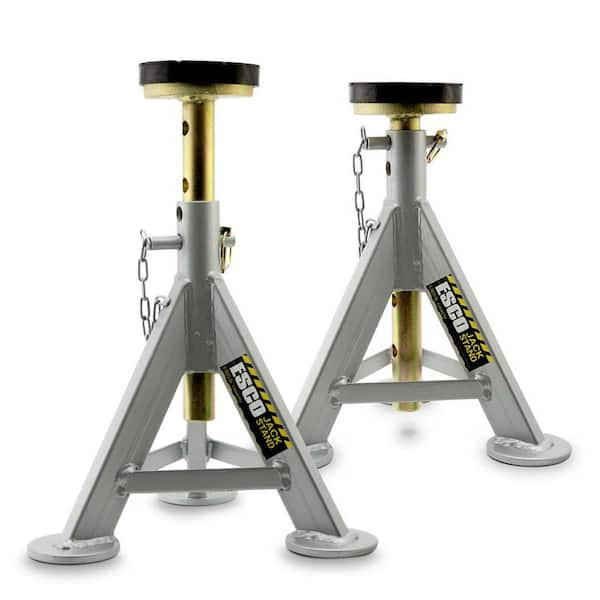
- Pin-Type (or Locking Pin): These stands feature a sturdy steel pin that passes through pre-drilled holes in the upright post and base. Many consider pin-type stands more secure for extremely heavy loads and long-term support due to the positive mechanical lock.
- Certifications: Look for certifications like ANSI (American National Standards Institute) or ASME (American Society of Mechanical Engineers), which indicate that the stands meet specific safety and performance standards.
Types of Jack Stands for Lifted Trucks
While the core function remains the same, jack stands for lifted trucks can be broadly categorized:
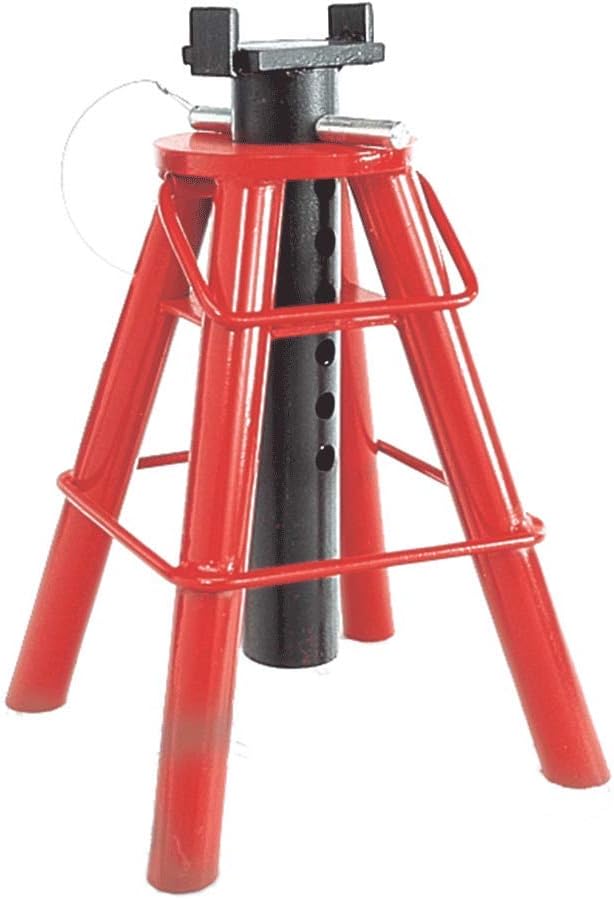
- Heavy-Duty Standard Jack Stands: These are essentially larger, more robust versions of conventional jack stands, offering higher capacities (6-ton, 10-ton, 12-ton, sometimes even 20-ton per pair) and greater maximum lift heights suitable for many lifted applications.
- High-Lift Jack Stands: Specifically designed for trucks with extreme lifts, these stands offer exceptionally high maximum lift heights, often exceeding 30 inches, allowing for ample clearance for even the most aggressively lifted vehicles.
- Specialized Jack Stands (e.g., Off-Road Specific): Some manufacturers offer stands with extra-wide bases or unique saddle designs tailored for specific frame types or off-road conditions, providing enhanced stability on uneven terrain. While not for general garage use, they are worth noting for specialized needs.
How to Safely Use Jack Stands on a Lifted Truck
Safety is paramount when working under any vehicle, especially a heavy, lifted truck. Follow these steps meticulously:
-
Preparation is Key:
- Level Surface: Always work on a hard, level, and stable surface, such as a concrete garage floor. Avoid sloped driveways, dirt, or gravel.
- Wheel Chocks: Place wheel chocks securely on the wheels that will remain on the ground. If lifting the front, chock the rear wheels; if lifting the rear, chock the front.
- Parking Brake: Engage the parking brake firmly.
- Transmission: Put the vehicle in "Park" (automatic) or the lowest gear (manual).
- Clearance: Ensure ample space around the truck for movement and equipment.
-
Lifting the Truck:
- Use an appropriate high-lift floor jack or bottle jack with sufficient capacity to lift your truck. Never use the jack alone to support the truck for extended periods.
- Position the jack on a strong, designated jacking point (e.g., frame rail, axle housing, or differential). Lift the truck slowly and steadily until it’s slightly higher than the desired jack stand height.
-
Placing the Jack Stands:
- Identify secure, sturdy points on the truck’s frame or solid axle tubes where the jack stands for lifted trucks will make contact. Consult your truck’s owner’s manual or a service manual for recommended support points.
- Avoid placing stands on suspension components, fuel lines, brake lines, exhaust pipes, or body panels.
- Place the jack stands directly underneath these strong points, ensuring they are evenly spaced and positioned to distribute the weight.
- Adjust the stands to the desired height, making sure the locking mechanism (ratchet pawl or pin) is fully engaged and secure on all stands.
-
Lowering onto Stands:
- Slowly and carefully lower the truck onto the jack stands for lifted trucks using the hydraulic jack. Ensure the truck settles firmly into the saddles of the stands.
- Once the truck is fully resting on the stands, give the truck a gentle push or shake to confirm stability. If there’s any wobbling or shifting, re-evaluate the placement and re-lift if necessary.
- Keep the hydraulic jack in place, slightly relieved of pressure but ready to re-engage, as an extra layer of safety, especially for heavier loads or longer jobs.
-
Double-Checking: Before going under the truck, visually inspect all four stands (if using all four) to ensure they are properly seated, level, and securely locked.
Maintenance and Care for Your Jack Stands
Proper care extends the life of your jack stands for lifted trucks and, more importantly, ensures their continued reliability and safety.
- Regular Inspection: Before and after each use, inspect your stands for any signs of damage: bent or cracked components, loose pins, excessive rust, or deformed saddles. If you find any damage, do not use the stand.
- Cleaning: Wipe down stands after use to remove dirt, grease, and moisture.
- Lubrication: Periodically apply a light coat of grease or lubricant to the adjustment mechanisms (ratchet pawls, pins, and posts) to ensure smooth operation and prevent seizing due to rust.
- Storage: Store jack stands for lifted trucks in a dry place to prevent rust. Avoid leaving them exposed to the elements.
Common Mistakes and How to Avoid Them
Even with the right jack stands for lifted trucks, improper usage can be dangerous.
- Overloading: Never exceed the stated weight capacity of your stands. This is a recipe for catastrophic failure.
- Uneven Ground: Working on sloped, soft, or uneven surfaces can cause stands to shift, sink, or tip over. Always use a level, hard surface.
- Improper Placement: Placing stands on weak points of the vehicle (e.g., exhaust, plastic trim, suspension arms not designed for support) can damage the vehicle and cause the stand to slip.
- Not Using Wheel Chocks: Failing to chock the wheels that remain on the ground allows the vehicle to roll, potentially dislodging the stands.
- Using Only a Jack: As emphasized, a jack is for lifting, not for supporting a vehicle during work. Always use jack stands for lifted trucks.
- Ignoring Damage: Using damaged or rusted stands is extremely dangerous. Replace them immediately if compromised.
Practical Advice and Actionable Insights
- Buy in Pairs (or Four): Always purchase jack stands for lifted trucks in sets. For most work, you’ll need at least two, but having four provides maximum stability and allows you to lift the entire vehicle.
- Invest in Quality: This is not an area to cut corners. Cheap, flimsy stands are a false economy when your safety is on the line. Buy from reputable manufacturers.
- Know Your Truck’s Weight: Don’t guess. Check your truck’s owner’s manual or driver’s side door jamb for the GVWR and curb weight.
- Practice Placement: If you’re new to working on a lifted truck, practice identifying and placing stands on the proper support points before you actually need to do a repair.
- Consider Accessories: A good quality creeper and proper lighting will make working under your lifted truck more comfortable and safer.
Price Table: Jack Stands for Lifted Trucks
This table provides estimated price ranges for common types of jack stands for lifted trucks (per pair), considering their capacity and features. Prices can vary significantly based on brand, material quality, and specific design.
| Model/Type (Per Pair) | Weight Capacity (Per Pair) | Min Lift Height (Approx.) | Max Lift Height (Approx.) | Base Dimensions (Approx.) | Price Range (USD) | Key Features |
|---|---|---|---|---|---|---|
| Heavy-Duty 6-Ton | 12,000 lbs (6 tons) | 15-18 inches | 23-28 inches | 10" x 10" | $70 – $150 | Ratchet or Pin-Type, Wide Base |
| Heavy-Duty 10-Ton | 20,000 lbs (10 tons) | 18-22 inches | 28-35 inches | 12" x 12" | $120 – $250 | Robust Construction, Larger Footprint |
| Heavy-Duty 12-Ton | 24,000 lbs (12 tons) | 20-24 inches | 30-38 inches | 13" x 13" | $180 – $350 | Extra Tall, Often Pin-Type, Industrial Grade |
| High-Lift 6-Ton | 12,000 lbs (6 tons) | 22-26 inches | 36-48 inches | 14" x 14" | $200 – $400+ | Extended Max Height for Extreme Lifts |
Note: Prices are estimates and subject to change based on retailer, brand, and market conditions.
Frequently Asked Questions (FAQ) about Jack Stands for Lifted Trucks
Q1: How many jack stands do I need for my lifted truck?
A1: At a minimum, you need two jack stands for lifted trucks for any work that requires lifting one end of the vehicle (e.g., front axle, rear axle). For maximum stability and safety, especially when removing wheels or performing extensive undercarriage work, it’s highly recommended to use four stands to support the entire vehicle.
Q2: Can I use regular jack stands on a lifted truck?
A2: No, it is generally unsafe to use regular jack stands on a lifted truck. Regular stands typically lack the necessary height to reach a lifted truck’s frame or axles, and their weight capacity is often insufficient for the heavier weight of a modified truck. Always use jack stands for lifted trucks specifically designed for higher capacities and greater lift heights.
Q3: Where should I place jack stands on a lifted truck?
A3: Always place jack stands for lifted trucks on strong, solid structural points of the vehicle. For most body-on-frame lifted trucks, this means directly under the frame rails (behind the front wheels and in front of the rear wheels) or directly under the solid axle tubes. Consult your truck’s owner’s manual or service manual for specific recommended jacking and support points. Avoid suspension components, fuel lines, brake lines, or body panels.
Q4: What’s the difference between pin-type and ratchet-type jack stands for lifted trucks? Which is better?
A4: Ratchet-type stands use a toothed bar and a pawl to lock in height, offering quick adjustment. Pin-type stands use a separate steel pin that passes through aligned holes in the upright post, providing a positive, mechanical lock. Many users prefer pin-type jack stands for lifted trucks for heavy loads due to their perceived absolute security, though modern, well-built ratchet stands are also very safe when used correctly. The "better" choice often comes down to personal preference for security versus speed of adjustment.
Q5: How do I know what capacity jack stands I need for my lifted truck?
A5: First, find your truck’s Gross Vehicle Weight Rating (GVWR) and curb weight (empty weight). A safe rule of thumb is to choose jack stands for lifted trucks with a combined capacity of at least 1.5 to 2 times your truck’s curb weight. For example, if your truck weighs 7,000 lbs, you should look for stands rated at 6-ton (12,000 lbs total capacity) or 10-ton (20,000 lbs total capacity) per pair. Always err on the side of higher capacity for safety.
Conclusion
Working on a lifted truck can be incredibly rewarding, but it demands an unwavering commitment to safety. Jack stands for lifted trucks are not merely tools; they are your primary line of defense against catastrophic failure and serious injury. By understanding the unique requirements of lifted vehicles, choosing stands with appropriate capacity and height, and meticulously following safe usage protocols, you empower yourself to perform maintenance with confidence and peace of mind. Investing in high-quality jack stands for lifted trucks is an investment in your safety and the longevity of your prized vehicle – an investment that pays dividends every time you work underneath it.