U-Haul Motorcycle Trailers: Your Comprehensive Guide to Hauling Your Ride
U-Haul Motorcycle Trailers: Your Comprehensive Guide to Hauling Your Ride
Whether you’re relocating across states, heading to a track day, rescuing a broken-down bike, or simply exploring new riding destinations without putting miles on your odometer, U-Haul motorcycle trailers offer a convenient and cost-effective solution. These specialized trailers provide a safe and reliable way to transport your prized possession, removing the stress and logistical challenges often associated with moving a motorcycle. This comprehensive guide will delve into everything you need to know about U-Haul motorcycle trailers, from understanding your options to safe loading and driving practices.
Why Choose a U-Haul Motorcycle Trailer?
The decision to rent a U-Haul motorcycle trailer often comes down to a blend of convenience, safety, and practicality. Here’s why they are a popular choice for many riders:
- Cost-Effectiveness: For infrequent needs, renting a trailer is significantly cheaper than purchasing one, especially when considering storage, maintenance, and insurance costs of ownership.
- Convenience and Availability: U-Haul boasts an extensive network of locations across North America, making it easy to find and rent a motorcycle trailer almost anywhere, often with short notice. Their one-way rental options are particularly beneficial for long-distance moves.
- Specialized Design for Motorcycles: Unlike general utility trailers, U-Haul’s dedicated motorcycle trailers are designed with features specifically for bikes, such as integrated ramps, appropriate tie-down points, and a low deck height for easier loading.
- Safety Features: These trailers are built to U-Haul’s safety standards, often equipped with robust construction, proper lighting, and strong axles to ensure a secure tow.
- Preserving Your Bike: Hauling your motorcycle prevents wear and tear, saves on fuel costs for the bike itself, and avoids unnecessary mileage, preserving its value and extending its life, especially on long journeys.
- Versatility: Beyond moving, U-Haul motorcycle trailers are ideal for transporting bikes to repair shops, rallies, track events, or even when purchasing a new bike from a distant seller.
Understanding U-Haul’s Motorcycle Trailer Options
U-Haul primarily offers a dedicated single motorcycle trailer, specifically designed for safely transporting one two-wheeled vehicle. While they have various utility trailers, the motorcycle-specific option is recommended for its tailored features.
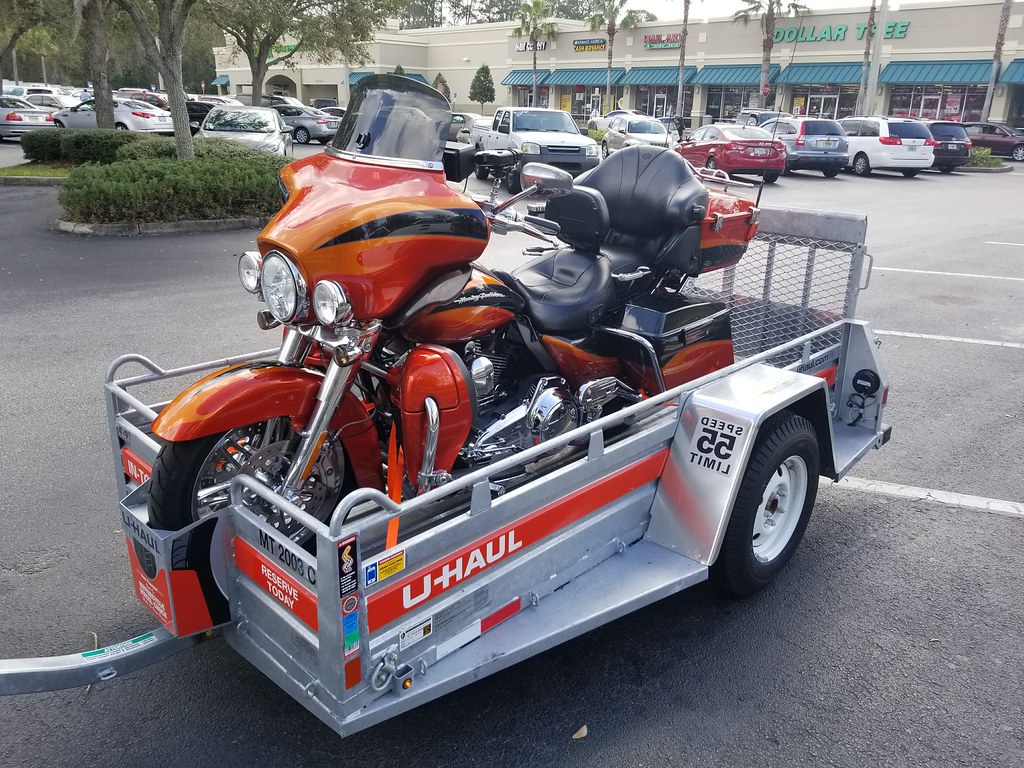
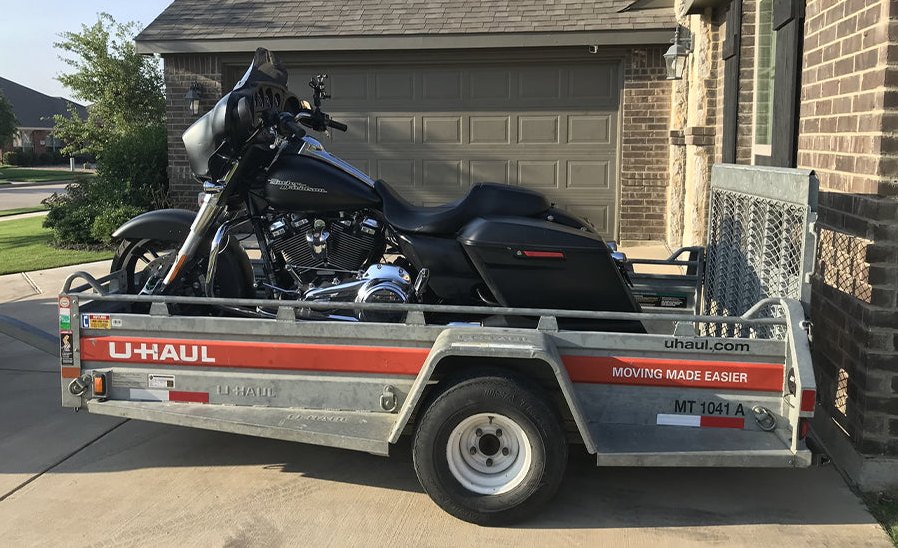
The U-Haul motorcycle trailer is an open, single-axle trailer, characterized by:
- Integrated Loading Ramp: A sturdy, fold-down ramp at the rear makes loading and unloading your motorcycle much simpler and safer than using external ramps.
- Low Deck Height: The trailer’s low profile contributes to a lower center of gravity, enhancing stability during transit, and further aids in easier loading.
- Strategic Tie-Down Points: Multiple tie-down loops are strategically placed around the trailer bed, allowing for secure attachment of straps to prevent movement during transport.
- Lightweight Construction: Designed to be easily towed by a wide range of vehicles, the trailer itself is relatively lightweight, maximizing the available payload for your motorcycle.
- Dimensions and Capacity: While exact specifications can vary slightly, these trailers typically accommodate most standard motorcycles, with a generous weight capacity. It’s crucial to verify your bike’s weight against the trailer’s capacity during the reservation process.
Preparing for Your U-Haul Motorcycle Trailer Rental
A smooth rental experience starts with proper preparation.
- Booking Your Trailer:
- Online Reservation: The easiest way to rent a U-Haul motorcycle trailer is through their official website: https://www.uhaul.com/Trailers/Motorcycle-Trailer/MT/ You can select your pickup and drop-off locations, dates, and vehicle type.
- Phone or In-Person: You can also call U-Haul directly or visit a local center to make a reservation. Booking in advance is highly recommended, especially during peak moving seasons or holidays.
- Towing Vehicle Requirements:
- Hitch: Your towing vehicle must have a properly installed hitch receiver (typically a 1-1/4" or 2" receiver) with a hitch ball of the correct size (usually 1-7/8" or 2").
- Wiring: Functional 4-flat electrical wiring is essential for the trailer’s brake lights, turn signals, and running lights.
- Towing Capacity: Crucially, your vehicle’s towing capacity must exceed the combined weight of the U-Haul motorcycle trailer (empty weight) and your motorcycle. Consult your vehicle’s owner’s manual for precise towing limits. U-Haul also has a towing calculator on their website to assist.
- Rear Axle Weight: Ensure your vehicle can handle the tongue weight of the loaded trailer.
- Required Documentation:
- A valid driver’s license.
- A major credit card for payment and deposit.
- Understanding Rental Agreements and Insurance:
- Read the rental agreement carefully, paying attention to rental duration, mileage limits (if any), and return policies.
- U-Haul offers various optional insurance coverage plans (e.g., SafeTow, SafeTrip) that can protect you against damage to the trailer, your vehicle, or third-party liability. Your personal auto insurance may or may not cover rented trailers, so it’s wise to check with your provider beforehand and consider U-Haul’s options for peace of mind.
- What to Bring:
- Quality Tie-Down Straps: While U-Haul trailers have tie-down points, you are responsible for providing your own high-quality, heavy-duty ratchet straps. Four straps are generally recommended (two for the front, two for the rear).
- Soft Ties/Handlebar Harness: These protect your motorcycle’s paint and chrome from direct contact with the straps.
- Chocks/Wheel Stands (Optional but Recommended): For extra stability, especially for larger bikes, a front wheel chock can be invaluable.
- Gloves and Basic Tools: For easier handling and strap adjustments.
Hooking Up and Loading Your Motorcycle Safely
Safety is paramount when using a U-Haul motorcycle trailer. Follow these steps meticulously.
Hooking Up the Trailer
- Positioning: Back your towing vehicle up to the trailer, aligning the hitch ball with the trailer coupler.
- Coupling: Lower the trailer tongue onto the hitch ball and lock the coupler securely. Double-check that it’s fully seated and locked.
- Safety Chains: Cross the safety chains under the trailer tongue and attach them to your vehicle’s hitch receiver or frame. This prevents the trailer from completely detaching if the coupler fails.
- Wiring: Connect the trailer’s electrical plug to your vehicle’s receptacle.
- Pre-Trip Inspection:
- Verify all lights (brake, turn signals, running lights) are working correctly.
- Check tire pressure on the trailer.
- Ensure the coupler is tight and secure.
- Confirm safety chains are properly attached.
- Check the condition of the ramp and tie-down points.
Loading Your Motorcycle
- Level Ground: Park the trailer on flat, level ground, ideally with your tow vehicle still attached for stability.
- Deploy Ramp: Lower the integrated loading ramp completely and ensure it’s stable.
- Load Carefully:
- For lighter bikes, you may be able to walk it up the ramp.
- For heavier bikes, consider using a helper or riding it up slowly and steadily, keeping your feet down and ready to balance. Avoid excessive throttle.
- Position the front wheel firmly against the front rail or into a wheel chock if you’re using one.
- Securing the Motorcycle: This is the most critical step.
- Front Straps: Attach two straps to the handlebars (using soft ties to protect grips/paint) or the triple tree. Angle them forward and outward to secure points on the trailer. Compress the front suspension by tightening these straps until the forks are noticeably compressed (about 50-70%). This prevents the bike from bouncing and loosening the straps.
- Rear Straps: Attach two more straps to the rear subframe, passenger pegs, or rear wheel. Angle these straps backward and outward to trailer tie-down points. These prevent the rear of the bike from swinging.
- Check Clearance: Ensure no part of the motorcycle is rubbing against the trailer or your towing vehicle.
- Weight Distribution: Ensure the motorcycle is centered on the trailer to maintain proper tongue weight (typically 10-15% of the total trailer weight) for stable towing. Too much or too little tongue weight can lead to dangerous trailer sway.
On the Road: Driving with a U-Haul Motorcycle Trailer
Driving with a trailer requires extra caution and awareness.
- Adjust Your Driving:
- Speed: Drive at reduced speeds, especially on curves, bumps, and during adverse weather. Obey posted trailer speed limits.
- Braking: Allow significantly more distance for braking. The added weight increases your stopping distance.
- Turns: Make wider turns to prevent the trailer from hitting curbs or other obstacles.
- Lane Changes: Be mindful of the increased length of your vehicle and trailer combination. Check mirrors frequently.
- Regular Inspections: Stop every 50-100 miles to check your tie-down straps, trailer lights, tire pressure, and the hitch connection. Straps can loosen due to vibrations.
- Weather Conditions: Be extra cautious in rain, strong winds, or snow. High winds can cause trailer sway, especially with an open trailer.
- Parking: When parking, look for spots that allow for easy maneuvering and exit, as backing up with a trailer can be challenging.
Returning Your U-Haul Motorcycle Trailer
Returning your U-Haul motorcycle trailer is straightforward:
- Unloading: Safely unload your motorcycle at your destination.
- Timely Return: Return the trailer to the agreed-upon U-Haul location by the specified time to avoid late fees.
- Inspection: U-Haul staff will inspect the trailer for any damage. Ensure it’s clean and free of personal belongings.
Important Considerations & Potential Challenges
- Towing Vehicle Limitations: Never exceed your vehicle’s rated towing capacity. Overloading is dangerous and can damage your vehicle.
- Insurance Coverage: Reconfirm your insurance coverage. Your personal auto policy might not cover rented trailers, making U-Haul’s supplemental coverage a wise investment.
- State and Local Laws: Be aware of varying towing laws regarding speed limits, trailer brakes (not usually required for single motorcycle trailers), and licensing in different states or provinces.
- Damage Prevention: Take extra care when loading and securing your bike to prevent scratches or dings. Use soft ties and protective padding where straps make contact with the motorcycle.
- Ramp Angle: For very low-slung or customized motorcycles, the standard ramp might be too steep. Consider bringing extra planks or blocks to decrease the angle if necessary.
- Security: When making stops, ensure your motorcycle is securely locked to the trailer, and the trailer is hitched to your vehicle or otherwise secured to deter theft.
Price Table: U-Haul Motorcycle Trailer Rental Estimates
Please note that these are estimated prices and can vary significantly based on location, availability, demand, rental duration, and whether it’s a one-way or in-town rental. Always check the U-Haul website for current and precise pricing for your specific needs.
| Rental Duration | Estimated In-Town Price Range (Daily) | Estimated One-Way Price Range (Daily) | Additional Costs (Typical) |
|---|---|---|---|
| 1-Day | $19.95 – $29.95 | $50 – $150 (Varies greatly by distance) | Sales Tax, Optional Insurance (e.g., SafeTow: $8-$15/day) |
| 2-Days | $39.90 – $59.90 | Varies significantly | Sales Tax, Optional Insurance |
| 3-Days | $59.85 – $89.85 | Varies significantly | Sales Tax, Optional Insurance |
| Weekly | Contact U-Haul for specific weekly rates | Varies significantly | Sales Tax, Optional Insurance |
Disclaimer: Prices are estimates and subject to change without notice. Always confirm exact pricing and availability directly with U-Haul.
Frequently Asked Questions (FAQ) about U-Haul Motorcycle Trailers
Q: What kind of motorcycle trailer does U-Haul offer?
A: U-Haul primarily offers a dedicated single motorcycle trailer (model MT), which is an open, single-axle trailer equipped with an integrated loading ramp and multiple tie-down points.
Q: What are the towing requirements for a U-Haul motorcycle trailer?
A: Your towing vehicle must have a hitch receiver (1-1/4" or 2" ball mount), a 1-7/8" or 2" hitch ball, functional 4-flat electrical wiring, and a towing capacity that exceeds the combined weight of the trailer and your motorcycle.
Q: Do I need to bring my own tie-downs?
A: Yes, U-Haul does not provide tie-down straps with their motorcycle trailers. You are responsible for bringing at least four high-quality, heavy-duty ratchet straps, and it’s recommended to use soft ties to protect your bike.
Q: Is insurance included with the rental?
A: Basic liability may be covered by your personal auto insurance, but it’s not guaranteed. U-Haul offers optional SafeTow coverage that can protect you from damage to the trailer and some third-party liability. It’s highly recommended to check with your personal insurance provider and consider U-Haul’s options.
Q: Can I tow more than one motorcycle with a U-Haul motorcycle trailer?
A: No, the dedicated U-Haul motorcycle trailer is designed to safely transport only one motorcycle. For multiple bikes, you would need a larger utility trailer or multiple motorcycle trailers, provided your towing vehicle can handle the combined weight.
Q: What if my motorcycle is very heavy or large?
A: Always verify your motorcycle’s weight against the trailer’s maximum weight capacity. While the U-Haul motorcycle trailer accommodates most standard bikes, exceptionally heavy or very long custom bikes might require alternative solutions or extra precautions during loading and securing.
Q: Can I rent a U-Haul motorcycle trailer one-way?
A: Yes, U-Haul offers one-way rentals for their motorcycle trailers, making them ideal for long-distance moves or trips where you won’t be returning to your starting point. One-way rental prices are typically higher and vary by distance.
Q: What should I do if I have an issue with the trailer on the road?
A: U-Haul provides 24/7 roadside assistance. You should contact their customer service immediately if you encounter any issues like a flat tire, lighting problems, or mechanical failures with the trailer.
Q: How do I properly secure my motorcycle to prevent damage?
A: Use four strong ratchet straps: two on the front (compressing the forks) and two on the rear. Ensure the straps are angled outward for stability. Use soft ties to prevent direct metal-on-metal contact. Check straps frequently during your trip.
Conclusion
U-Haul motorcycle trailers provide an invaluable service for motorcycle enthusiasts and movers alike, offering a flexible, affordable, and safe way to transport your motorcycle. By understanding the rental process, preparing your towing vehicle, and diligently following safe loading and driving practices, you can ensure a smooth and worry-free journey for your beloved bike. Whether it’s for a cross-country move or a weekend adventure, U-Haul’s dedicated motorcycle trailers empower you with the freedom to take your ride wherever the road may lead, without putting unnecessary miles on it.