CV Axles for Lifted Trucks: A Comprehensive Guide
CV Axles for Lifted Trucks: A Comprehensive Guide
Lifting a truck transforms its appearance and enhances its off-road capabilities, but this modification introduces a unique set of engineering challenges, particularly for the drivetrain. Among the most critical components affected are the CV (Constant Velocity) axles. Often overlooked until failure strikes, CV axles are the unsung heroes responsible for transmitting power from your differential to the wheels, allowing for smooth, efficient power delivery even when your suspension is articulating wildly. For lifted trucks, understanding, maintaining, and upgrading these components isn’t just a recommendation—it’s essential for reliability, performance, and safety. This guide delves deep into the world of CV axles for lifted trucks, offering insights, advice, and solutions to keep your rig rolling strong.
Understanding CV Axles and Their Role in Lifted Trucks
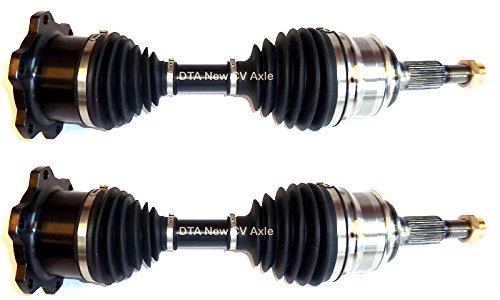
A CV axle is a sophisticated assembly designed to transmit torque at a constant velocity, regardless of the angle between the driving and driven shafts. Each axle consists of an inner CV joint, a connecting shaft, and an outer CV joint. These joints are protected by rubber or thermoplastic boots filled with grease, shielding them from contaminants and retaining lubrication.
In a stock truck, the CV axles operate within their engineered limits, experiencing relatively mild angles. However, when a truck is lifted, the suspension geometry changes dramatically. The differential often remains in its original position, while the wheels are lowered, increasing the angle at which the CV axles operate. This increased operating angle is the root cause of most CV axle problems in lifted applications.
The Impact of Lift on CV Axles:
- Increased Stress: Higher angles put immense stress on the CV joints, especially during suspension articulation or aggressive driving.
- Boot Failure: The boots, designed for specific ranges of motion, can stretch, tear, or crack prematurely when subjected to extreme angles, leading to grease leakage and contamination.
- Premature Wear: Without proper lubrication and protection, dirt, water, and debris quickly destroy the internal components of the CV joint, leading to accelerated wear and eventual failure.
- Binding: At very high angles, the internal components of the CV joint can bind, leading to vibrations, noise, and potential catastrophic failure.
Common Challenges with Stock CV Axles on Lifted Trucks
While a minor lift (1-2 inches) might not immediately overwhelm stock CV axles, significant lifts (3 inches or more) almost invariably lead to issues. Here are the most common challenges:
- Exaggerated Operating Angles: This is the primary culprit. The steeper the angle, the harder the joints work, and the faster they wear out.
- Rapid Boot Degradation: The protective boots are often the first point of failure. Constant stretching and compression at extreme angles cause them to rip, allowing grease to escape and contaminants to enter.
- Premature Joint Failure: Once the boots fail, the lack of lubrication and introduction of grit rapidly corrode the bearings and races within the CV joints, leading to clicking, popping, grinding, and eventually complete failure.
- Vibration and Noise: A compromised CV axle can cause noticeable vibrations, especially under acceleration or when turning. Clicking or popping noises, particularly during turns, are classic symptoms of a failing outer CV joint.
- Reduced Drivetrain Efficiency: Binding or excessive friction within failing CV joints can absorb power, reducing fuel economy and overall performance.
- Catastrophic Breakage: Under extreme stress—like hitting a bump off-road with the wheels turned, or heavy acceleration with large tires—a severely compromised CV axle can snap, leaving you stranded.
Types of CV Axles for Lifted Trucks
To address these challenges, the aftermarket has developed various CV axle solutions tailored for lifted applications. Choosing the right type depends on your lift height, intended use, and budget.
- OEM-Style Replacement Axles: These are typically direct replacements for your truck’s original axles. While suitable for stock or very mild lifts, they offer no improvement in angle capability or strength for significantly lifted trucks. They are the cheapest option but often a temporary fix for lifted applications.
- Heavy-Duty (HD) Aftermarket Axles: Designed to be stronger than OEM, these axles often feature improved materials (e.g., chromoly steel shafts), larger diameter shafts, and sometimes slightly more robust CV joints. They are a good upgrade for moderately lifted trucks (2-4 inches) that see light to moderate off-road use. They might offer a slightly better boot design but are still limited by the fundamental geometry challenge.
- High-Angle / Extended Travel Axles: These are specifically engineered for significant lifts (4+ inches) and serious off-road enthusiasts. They incorporate several key improvements:
- Larger, Stronger CV Joints: Designed to operate efficiently at much steeper angles.
- Optimized Boot Design: Often made from more durable thermoplastic materials with enhanced pleat designs to withstand greater articulation without tearing.
- Extended Travel Capability: Allows for greater suspension droop and compression without binding.
- High-Strength Shafts: Typically made from superior alloy steels for increased resistance to torsion and bending.
- Custom / Hybrid Axles: For extreme builds or highly specific applications, some choose custom-fabricated axles or hybrid designs that combine components from different manufacturers to achieve specific performance goals. This is less common for the average user.
Key Considerations When Choosing CV Axles for Your Lifted Truck
Selecting the right CV axles is crucial. Here’s what to look for:
- Lift Height: This is the most critical factor. The higher your lift, the more extreme the CV angle, and the more you need high-angle capable axles.
- Intended Use: A daily driver with a mild lift has different needs than a dedicated off-road rig. If you frequently articulate your suspension, invest in extended-travel options.
- Tire Size: Larger, heavier tires increase the rotational mass and strain on the entire drivetrain, including the CV axles. Factor in tire size when assessing required strength.
- Material and Construction: Look for axles made from high-strength steels (e.g., 4340 chromoly), with precision machining and quality heat treatment. Inspect boot material—thermoplastic boots generally offer better durability than traditional rubber.
- Joint Design: Some high-angle axles feature larger balls and cages within the CV joint to distribute load more effectively and allow for greater articulation.
- Warranty: A good warranty indicates manufacturer confidence in their product.
- Brand Reputation: Stick to reputable brands known for producing quality off-road components. Research reviews and forums.
- Differential Drop Kits: Consider installing a differential drop kit if available for your truck and lift height. These kits lower the front differential slightly, reducing the operating angle of the CV axles and significantly extending their lifespan, even with upgraded axles.
Installation and Maintenance Tips for Longevity
Even the best CV axles require proper installation and ongoing maintenance to last.
- Professional Installation: While possible for a skilled DIYer, CV axle replacement can be complex. Proper torque specs, handling of fasteners, and potential component removal (e.g., steering knuckle, brakes) make professional installation advisable.
- Regular Visual Inspections: Get into the habit of inspecting your CV boots every oil change or before and after off-road trips. Look for cracks, tears, bulges, or grease leaks. Catching a torn boot early can save the joint by allowing for a simple boot replacement and repacking.
- Listen for Warning Signs: Pay attention to any clicking, popping, clunking, or vibrations coming from the front end, especially when turning or under acceleration. These are often early indicators of CV joint failure.
- Avoid Excessive Wheel Spin: While tempting, aggressive wheel spin, especially when stuck, puts extreme shock loads on the CV axles and can lead to breakage.
- Drive Responsibly Off-Road: Try to avoid hitting obstacles or landing jumps with the wheels turned sharply, as this maximizes the stress on the CV joints.
- Check Fasteners: Periodically check the torque on all CV axle retaining nuts and bolts. Loose fasteners can contribute to premature wear or vibrations.
Troubleshooting Common CV Axle Problems
- Clicking/Popping Noise (especially when turning): Almost always indicates a failing outer CV joint.
- Clunking/Vibration (especially under acceleration): Often points to a failing inner CV joint or a loose axle nut.
- Grease on the Inside of the Wheel or Undercarriage: A clear sign of a torn CV boot. Address immediately to prevent joint contamination.
- Grinding Noise: Indicates severe wear and impending failure of the CV joint.
Price Table: CV Axles for Lifted Trucks
| Type of CV Axle | Key Features | Compatibility (Lift Height Range) | Average Price Range (Per Axle) | Notes |
|---|---|---|---|---|
| OEM-Style Replacement | Standard materials, direct fit. | Stock – 2 inches | $80 – $200 | Basic replacement, not recommended for significant lifts. |
| Heavy-Duty (HD) | Stronger materials (e.g., chromoly shaft), improved boots. | 2 – 4 inches | $200 – $450 | Good for moderate lifts and light to moderate off-roading. |
| High-Angle / Extended Travel | Larger, stronger CV joints, optimized boot design, higher articulation. | 4+ inches | $450 – $900+ | Essential for serious off-road use and larger lifts. Premium materials and engineering. |
| Hybrid/Custom | Combines components, specific engineering for extreme builds. | Variable (Extreme Lifts) | $700 – $1500+ | Niche product for highly specialized applications. |
Prices are estimates and can vary based on truck model, brand, retailer, and specific features.
Frequently Asked Questions (FAQ)
Q: Do I need new CV axles if I lift my truck?
A: For lifts of 3 inches or more, upgrading your CV axles to heavy-duty or high-angle options is highly recommended to prevent premature failure and ensure reliability. For smaller lifts, a differential drop kit might suffice, but monitoring stock axles is crucial.
Q: What are the signs of a failing CV axle?
A: Common signs include clicking or popping noises (especially when turning), clunking or vibrations (especially under acceleration), and grease leaking from the CV boots.
Q: Can I drive with a broken CV axle?
A: If a CV axle is completely broken, your truck will lose power to that wheel, effectively becoming 2WD (if a front axle on a 4WD truck). While you might be able to limp home in 2WD, it’s not advisable to drive long distances as it can cause further damage to the differential or surrounding components.
Q: What’s the difference between OEM and aftermarket CV axles?
A: OEM (Original Equipment Manufacturer) axles are designed to factory specifications for stock vehicles. Aftermarket axles, particularly heavy-duty or high-angle versions, are often designed with stronger materials, improved joint geometry, and more durable boots to withstand the increased stresses of lifted applications.
Q: How often should I inspect my CV axles?
A: It’s good practice to visually inspect your CV boots and joints at every oil change or at least every 5,000 miles. If you frequently off-road, inspect them before and after each trip.
Q: What is a differential drop kit, and does it help?
A: A differential drop kit lowers the front differential slightly, reducing the severe operating angle of the CV axles that results from a suspension lift. This significantly reduces stress on the CV joints and boots, extending their lifespan. They are highly recommended for most lifted trucks.
Conclusion
CV axles are a critical, yet often underestimated, component in any lifted truck’s drivetrain. Ignoring their specific needs after a lift can lead to frustrating breakdowns, costly repairs, and compromised safety. By understanding the challenges introduced by altered suspension geometry, investing in the right type of aftermarket CV axles, and adhering to a regimen of regular inspection and maintenance, you can ensure your lifted truck performs reliably and efficiently for countless miles, whether on the pavement or forging new trails. Prioritize your CV axles, and they will ensure your power gets to the ground, no matter how high you lift your rig.
For more in-depth information and product selection, consider consulting specialized off-road component retailers and resources online: