Wireless Strobe Lights for Trucks: Illuminating Safety and Efficiency on the Road
Wireless Strobe Lights for Trucks: Illuminating Safety and Efficiency on the Road. In the demanding world of commercial trucking, utility operations, construction, and emergency services, visibility isn’t just a convenience – it’s a critical safety imperative. Traditional wired strobe lights have long served this purpose, but a new era of innovation has brought forth a superior solution: wireless strobe lights for trucks.
These self-contained, battery-powered, and remotely controlled lighting systems are revolutionizing how trucks enhance their presence, offering unparalleled flexibility, ease of installation, and enhanced safety for both the vehicle operator and surrounding traffic.
Wireless strobe lights for trucks eliminate the complexities of traditional wiring, providing a swift, adaptable, and highly visible warning system that can be deployed wherever and whenever needed. They are essential for signaling presence in hazardous work zones, alerting drivers to slow-moving or stopped vehicles, and ensuring compliance with safety regulations. Their emergence marks a significant leap forward in vehicle safety technology, offering a modern, efficient, and hassle-free approach to ensuring your truck stands out.
Understanding Wireless Strobe Lights for Trucks
At its core, a wireless strobe light system for trucks comprises one or more light units, a remote control, and often a charging mechanism. Unlike their wired counterparts that require drilling into the vehicle’s body and intricate electrical connections, wireless units are typically powered by rechargeable internal batteries.
The “wireless” aspect primarily refers to the absence of power wires connecting the light unit to the truck’s electrical system, and the ability to control the lights (power on/off, flash pattern changes) via a radio-frequency (RF) remote.
Each light unit contains high-intensity LEDs (Light Emitting Diodes) engineered for maximum brightness and efficiency, encapsulated in durable, weather-resistant housings.
The integrated wireless module allows seamless communication with the remote controller, which can often manage multiple lights simultaneously, synchronizing their flash patterns for a cohesive and impactful warning signal. This sophisticated yet user-friendly design makes wireless strobe lights for trucks a game-changer for operations demanding quick setup and versatile deployment.
The Unmistakable Advantages of Going Wireless
The shift towards wireless strobe lights for trucks is driven by a host of compelling benefits that address many of the limitations of traditional systems:
- Effortless Installation & Portability: This is perhaps the most significant advantage. With strong magnetic bases or suction cups, wireless units can be mounted in seconds to any metallic surface on the truck, or even on windows. No drilling, no cutting, no splicing wires. This makes them ideal for temporary use, shared vehicles, or situations where permanent modifications are undesirable. They can be easily moved from one truck to another, or repositioned as needed.
- Reduced Vehicle Modification: Preserving the integrity of your truck’s body is crucial, especially for leased vehicles or those with specific warranty requirements. Wireless systems eliminate the need for permanent holes or extensive wiring harnesses, protecting the vehicle’s resale value and structural integrity.
- Enhanced Safety & Versatility: The ability to quickly deploy lights exactly where they are most needed on the vehicle (e.g., side of a flatbed, rear of a dump truck, top of a cab) ensures optimal visibility from all angles. Many systems offer multiple flash patterns, allowing operators to choose the most effective warning signal for different scenarios, from emergency stops to active work zones.
- Cost-Effectiveness (Long Term): While the initial purchase price might sometimes be comparable to wired systems, the savings in installation labor are substantial. Furthermore, the ability to transfer lights between vehicles maximizes their utility, reducing the need to equip every truck with dedicated wired setups. Maintenance is also simplified, often limited to recharging batteries and occasional cleaning.
- Improved Aesthetics: Without visible wires or bulky external components, wireless strobe lights maintain a cleaner, more professional appearance on the vehicle when not in use or during operation.
- Rapid Deployment in Emergencies: In unexpected breakdowns or roadside incidents, quick deployment of warning lights is paramount. Wireless units can be activated and placed in seconds, significantly reducing the time a disabled vehicle remains unprotected.
Types of Wireless Strobe Lights for Trucks
Wireless strobe lights for trucks come in various forms to suit diverse needs and applications:
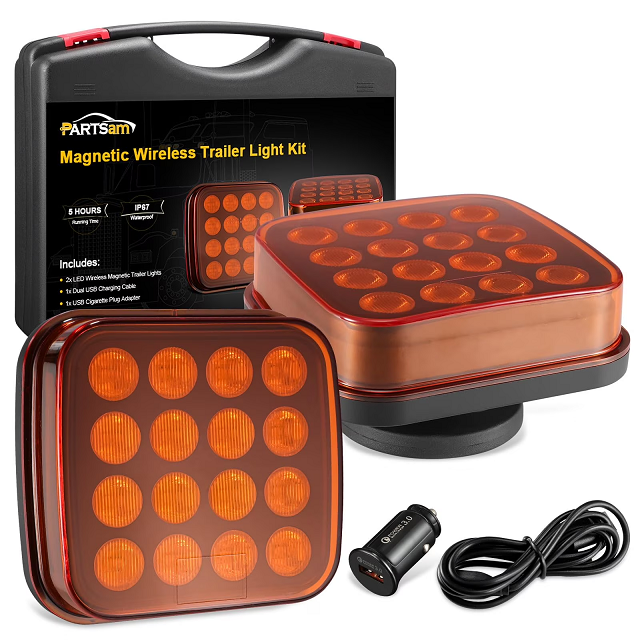
- Individual Pods/Modules: These are typically compact, self-contained units, often with magnetic or suction cup bases. They are highly versatile, allowing for strategic placement around the vehicle to achieve 360-degree visibility. They are often sold in kits of 2, 4, or 6 units with a single remote.
- Wireless Mini-Light Bars: Smaller versions of traditional light bars, these units are still self-contained and battery-powered, offering a concentrated source of light. They are often magnetic-mounted and suitable for roof or tailgate placement.
- Rechargeable Work Lights with Strobe Function: Some multi-functional work lights also incorporate a strobe or emergency flash mode, offering dual utility for roadside repairs or area illumination in addition to warning signals.
- Color Options: Common colors include amber (for utility, construction, towing, general warning), red/blue (typically restricted to emergency vehicles like police/fire/EMS), white (often used as scene lighting or additional warning), and green (sometimes used for specific volunteer services or certain types of heavy machinery). Always verify local and state regulations regarding permissible colors and usage.
Key Considerations When Choosing Wireless Strobe Lights
Selecting the right wireless strobe lights for your truck involves evaluating several crucial factors to ensure they meet your specific requirements for performance, durability, and compliance:
- Brightness (Lumens/Candela): This indicates how powerful the light output is. Consider the environments your truck operates in (daylight, fog, night) and the distance from which the warning needs to be visible. Look for high-intensity LEDs (e.g., 3W or 5W LEDs per module).
- Battery Life & Charging: Assess the continuous run time on a full charge. Most quality units offer 4-10 hours, sufficient for a typical shift or emergency. Check the charging method (12V DC car charger, AC wall charger) and charging time. Some advanced systems offer solar charging capabilities.
- Wireless Range & Reliability: Ensure the remote control operates effectively from a reasonable distance (e.g., 50-100 feet). A robust wireless connection is essential to avoid signal drops or interference, especially in busy environments.
- Durability & Weatherproofing (IP Rating): Trucks operate in harsh conditions. Look for an IP (Ingress Protection) rating of IP67 or IP68, indicating full protection against dust ingress and immersion in water, making them suitable for all-weather outdoor use. High-quality polycarbonate lenses and aluminum housings are also indicators of durability.
- Flash Patterns & Customization: More flash patterns offer greater versatility. Look for systems that allow synchronization of multiple lights and memory recall for preferred patterns. Some high-end units allow custom programming.
- Mounting Options & Security: While magnetic mounts are convenient, ensure the magnets are strong enough to withstand road vibrations and wind speeds your truck will encounter. Consider safety tethers for added security, especially for roof-mounted applications.
- Compliance & Regulations: This is paramount. Research your local Department of Transportation (DOT), SAE (Society of Automotive Engineers) J595 (for warning lights), and state/county regulations regarding permissible light colors, flash patterns, and usage for your specific type of vehicle and operation. Misuse can lead to fines or safety hazards.
- Cost vs. Quality: While it’s tempting to opt for the cheapest option, investing in higher-quality wireless strobe lights for trucks often translates to better brightness, longer battery life, superior durability, and more reliable wireless performance, saving money and headaches in the long run.
Installation & Operation: A Simple Guide
One of the greatest appeals of wireless strobe lights for trucks is their straightforward setup:
- Charge Batteries: Before first use, fully charge all light units according to the manufacturer’s instructions.
- Clean Mounting Surface: For magnetic or suction cup mounts, ensure the mounting surface on your truck is clean, dry, and free of debris for maximum adhesion and security.
- Securely Mount Lights: Place the lights firmly on the desired metallic surface (e.g., roof, tailgate, side panels) or window. Ensure a strong magnetic connection or suction seal. For critical applications or high speeds, consider using safety tethers if provided.
- Pair Remote (if necessary): Some systems require a one-time pairing process between the remote and the light units. Follow the specific instructions in your user manual.
- Operation: Use the remote control to power the lights on/off, cycle through various flash patterns, and activate any synchronization features.
- Maintenance: Regularly recharge the lights, especially after extended use. Clean the lenses and housing periodically to ensure maximum light output and inspect the mounting base for any wear or damage.
Maximizing Your Investment: Tips & Best Practices
To get the most out of your wireless strobe lights for trucks and ensure optimal safety:
- Strategic Placement: Don’t just place them anywhere. Position lights to provide 360-degree visibility, especially at the highest points and corners of your truck. For roadside work, ensure visibility from both approaching traffic directions.
- Regular Charging: Make it a routine to charge your lights after each use or at the end of every shift. A dead battery renders a wireless light useless.
- Keep Them Clean: Dirt, dust, and grime can significantly reduce light output. Wipe down the lenses and housing regularly.
- Know Your Regulations: Reiterate the importance of understanding and adhering to local laws regarding light color and usage. What’s legal for a tow truck might not be for a delivery truck.
- Vary Flash Patterns: Different situations might call for different patterns. A rapid flash is good for high-speed warnings, while a slower pulse might be better for an active work zone.
- Consider Backup: For critical operations, always have a fully charged spare set or a traditional wired option as a fallback.
Addressing Potential Challenges

While highly advantageous, wireless strobe lights for trucks do present a few considerations:
- Battery Depletion: The primary challenge is ensuring lights are charged.
- Solution: Implement a strict charging routine, invest in higher capacity batteries, or consider models with low-battery indicators or even solar charging capabilities.
- Wireless Interference: In areas with heavy radio frequency traffic, minor interference might occur.
- Solution: Choose reputable brands with robust wireless protocols. If issues persist, try repositioning the remote or lights slightly.
- Mounting Security: While magnetic mounts are strong, extreme vibrations or impacts could dislodge them.
- Solution: Always ensure a clean, flat mounting surface. For high-speed applications or rough terrain, utilize safety tethers.
- Theft Risk: Being easily removable makes them susceptible to theft if left unattended.
- Solution: Remove and store lights inside the cab or a secure compartment when the truck is parked or unsupervised.
Price Table: Wireless Strobe Lights for Trucks
| Product Type | Key Features | Typical Price Range (USD) | Recommended Use |
|---|---|---|---|
| Basic Individual Pod (x1) | Single magnetic/suction mount unit, 3-5 flash patterns, 2-4 hr battery life, IP65. | $30 – $70 | Emergency roadside kits, personal vehicles, light-duty warning, and supplementary lighting. |
| Mid-Range Kit (2-4 Pods) | Multiple synchronized units, strong magnetic bases, 6-8+ flash patterns, 4-8 hr battery, IP67, remote control. | $150 – $350 | Utility trucks, construction vehicles, towing, pilot cars, and general fleet safety. |
| High-End Kit (4-6+ Pods) | Advanced synchronization, longer battery life (8-12 hrs), ruggedized IP68 housing, custom patterns, advanced remote, quick charge. | $400 – $800+ | Commercial fleets, emergency response (non-primary), heavy-duty construction, specialized industrial trucks. |
| Wireless Mini-Light Bar | Single roof-mount unit (magnetic), multiple flash patterns, 4-6 hr battery, IP67. | $100 – $300 | Rooftop warning for smaller trucks, temporary hazard lighting, utility vans. |
Note: Prices are estimates and can vary based on brand, features, retailer, and specific certifications.
Frequently Asked Questions (FAQ)
Q1: Are wireless strobe lights for trucks legal for my vehicle?
A1: Legality depends entirely on your local and state laws, and the color of the lights. Amber is generally acceptable for utility, construction, and towing vehicles. Red and blue are typically restricted to emergency services. Always check your specific state’s vehicle code or DOT regulations.
Q2: How long do the batteries typically last on a full charge?
A2: Most quality wireless strobe lights offer a continuous run time of 4 to 8 hours on a full charge, though some high-end models can last 10-12+ hours. Factors like flash pattern, brightness setting, and battery age can influence this.
Q3: Can I use them on any type of truck?
A3: Yes, as long as there is a suitable, clean, and flat mounting surface (e.g., metal for magnetic mounts, glass for suction cups). Their versatility is a major benefit for various truck types, from pickups to semi-trucks, dump trucks, and utility vans.
Q4: Are wireless strobe lights truly waterproof?
A4: Reputable brands offer lights with an IP (Ingress Protection) rating of IP67 or IP68, indicating they are fully protected against dust and can withstand immersion in water for a certain depth and duration. Always check the IP rating before purchase if you plan to use them in harsh weather.
Q5: How far can the remote control operate the lights?
A5: The typical range for wireless remote controls is between 50 and 100 feet (15-30 meters), though this can vary based on obstacles, interference, and the specific system.
Q6: Can multiple wireless lights be synchronized to flash together?
A6: Yes, most modern wireless strobe light kits are designed to synchronize multiple units to flash in unison or in alternating patterns, creating a more impactful and professional warning signal.
Q7: Are they bright enough to be effective during daylight hours?
A7: High-quality wireless strobe lights for trucks utilize powerful, efficient LEDs that are designed to be highly visible even in bright daylight. Look for models with high lumen or candela ratings and clear lenses for optimal daytime performance.
Conclusion
Wireless strobe lights for trucks represent a significant advancement in vehicle safety and operational efficiency. Their ease of installation, unparalleled versatility, and enhanced visibility make them an indispensable tool for anyone operating a commercial, utility, or emergency vehicle. By understanding the different types, key considerations, and best practices for their use, truck operators can confidently leverage this technology to significantly improve their presence on the road, mitigate risks, and ensure a safer working environment for all. Investing in quality wireless strobe lights is not just about compliance; it’s about prioritizing safety and embracing the future of intelligent vehicle illumination.