The Ultimate Guide to U-Haul Trailers: Your Moving and Hauling Companion
The Ultimate Guide to U-Haul Trailers: Your Moving and Hauling Companion
Moving, renovating, or simply needing to transport large items can often feel like a monumental task. Fortunately, solutions exist to empower individuals to tackle these challenges with confidence and control. Among the most prominent and accessible of these solutions is the U-Haul trailer. For decades, U-Haul has been synonymous with do-it-yourself moving and hauling, and their extensive fleet of trailers plays a pivotal role in this reputation.
A U-Haul trailer is a versatile, rentable piece of equipment designed to be hitched to your personal vehicle, significantly expanding its cargo capacity. Whether you’re relocating across town, embarking on a cross-country adventure, clearing out a garage, or hauling materials for a home improvement project, U-Haul trailers offer a cost-effective and flexible way to transport your belongings safely and efficiently. This comprehensive guide will delve into every aspect of U-Haul trailers, from understanding their types and benefits to mastering the rental process and ensuring safe operation, providing you with all the knowledge you need to make your next move or haul a success.
Why Choose a U-Haul Trailer? The Benefits of DIY Hauling
Opting for a U-Haul trailer for your transportation needs comes with a multitude of advantages, making it a popular choice for individuals and families alike.
- Cost-Effectiveness: Compared to hiring professional movers or even renting a full-sized moving truck when you already own a capable towing vehicle, U-Haul trailers often present a more economical solution. You save on labor costs and potentially fuel, as trailers are generally lighter and more aerodynamic than large trucks.
- Flexibility and Control: Renting a U-Haul trailer puts you in the driver’s seat – literally. You dictate the schedule, the route, and the packing process, allowing for a personalized experience tailored to your specific needs and timeline. This autonomy is invaluable for those who prefer a hands-on approach.
- Wide Availability and Selection: With thousands of locations across North America, U-Haul trailers are readily accessible. Their diverse fleet ensures you can find a trailer perfectly suited for the size and type of your load, from small enclosed trailers for personal items to large utility trailers for bulky equipment.
- Versatility for Various Tasks: Beyond traditional household moves, U-Haul trailers are incredibly versatile. They are ideal for transporting furniture, appliances, landscaping materials, construction debris, recreational vehicles like ATVs or motorcycles, and even other cars. This adaptability makes them a valuable resource for a wide range of projects.
- Ease of Rental Process: U-Haul has streamlined its reservation and pickup process, allowing for online bookings, flexible pickup times, and a straightforward return policy, making the entire experience as hassle-free as possible.
Types of U-Haul Trailers: Finding Your Perfect Match
U-Haul offers a specialized range of trailers, each designed to meet distinct hauling requirements. Understanding the differences is key to selecting the right U-Haul trailer for your specific job.
1. Cargo Trailers (Enclosed)
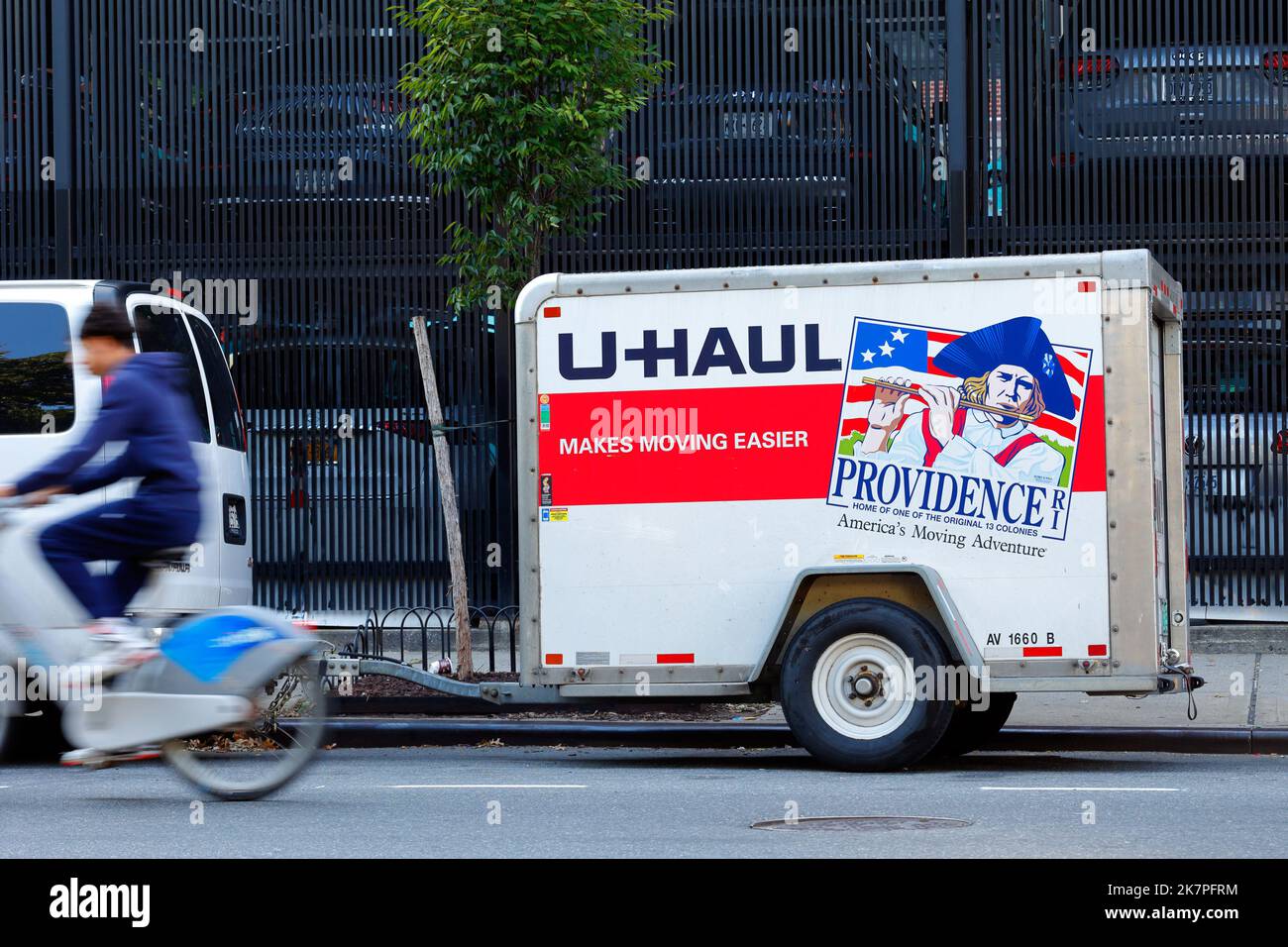
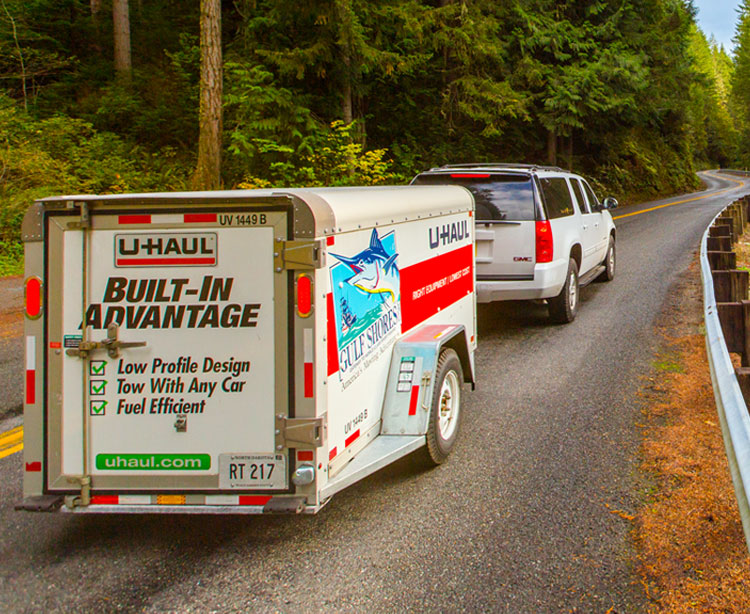
These trailers are fully enclosed, providing maximum protection for your belongings against weather, road debris, and theft. They are ideal for moving household goods, sensitive equipment, or anything that needs to stay dry and secure.
- 4′ x 8′ Cargo Trailer: Perfect for small moves, dorm room items, or extra luggage. Offers 200 cu. ft. of space.
- 5′ x 8′ Cargo Trailer: A popular choice for apartment moves or transporting furniture. Provides 256 cu. ft. of space.
- 5′ x 10′ Cargo Trailer: Suited for 1-bedroom apartment moves or larger hauls. Offers 390 cu. ft. of space.
- 6′ x 12′ Cargo Trailer: The largest enclosed option, great for 2-bedroom homes, large furniture, and extensive cargo. Features a low loading deck and a ramp for easy loading, providing 528 cu. ft. of space.
2. Utility Trailers (Open)
Utility trailers are open-top trailers, designed for hauling items that are irregularly shaped, too tall for an enclosed trailer, or resistant to weather, such as landscaping materials, construction debris, or large equipment.
- 4′ x 7′ Utility Trailer: Ideal for light-duty hauling, garden waste, or small equipment.
- 5′ x 8′ Utility Trailer: A versatile option for home improvement projects, bulk items, or small furniture.
- 6′ x 12′ Utility Trailer: The largest utility trailer, featuring a low loading deck and often a ramp, perfect for transporting ATVs, motorcycles, riding mowers, or large construction materials. It can also come with high sides for increased capacity.
3. Car Trailers (Auto Transport & Tow Dolly)
For those needing to transport a vehicle, U-Haul offers two primary options.
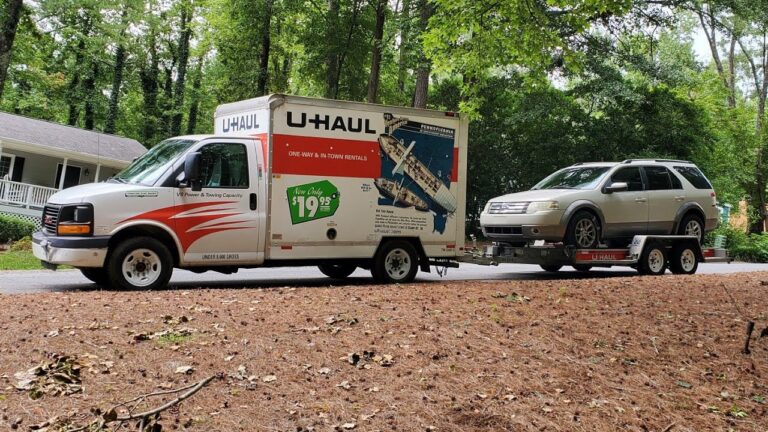
- Auto Transport Trailer: A full-sized car hauler that carries your entire vehicle on its platform. This is the safest and most secure option for long-distance car towing, protecting all four wheels from wear and tear. It typically comes with an easy-access loading ramp and integrated tie-downs.
- Tow Dolly: A two-wheel trailer designed to lift the front wheels of your towed vehicle off the ground, leaving the rear wheels on the road. It’s a more economical option for shorter distances or lighter vehicles, but requires the towed vehicle’s steering wheel to be secured and the transmission to be in neutral (for rear-wheel drive) or disengaged.
The U-Haul Trailer Rental Process: A Step-by-Step Guide
Renting a U-Haul trailer is a straightforward process, but knowing the steps beforehand can ensure a smooth experience.
- Reservation: The easiest way to secure your U-Haul trailer is by reserving online at U-Haul’s official website. You can also call or visit a local U-Haul center. Provide your desired pickup and return locations, dates, and the type of trailer you need. Booking in advance, especially during peak moving seasons (summer, end of month), is highly recommended to ensure availability.
- Choosing the Right Trailer: Use U-Haul’s online tools or consult with a representative to match your load size and weight with the appropriate trailer. Crucially, ensure your towing vehicle meets the specific requirements for the chosen trailer, including hitch class, towing capacity, and electrical connections.
- Pickup:
- Inspection: Before leaving the lot, thoroughly inspect the trailer for any existing damage and ensure it’s noted on your rental agreement. Check tire pressure, lights, and the condition of the hitch.
- Hooking Up: A U-Haul representative will assist you in securely attaching the trailer to your towing vehicle. This involves connecting the hitch to the ball, securing the safety chains, and plugging in the electrical harness for brake lights and turn signals.
- Safety Check: Confirm all lights (headlights, brake lights, turn signals) are working correctly with the trailer attached. Ensure the coupler is locked onto the hitch ball and the safety chains are crossed underneath the coupler.
- Rental Period & Return: U-Haul offers flexible rental periods, typically daily rates. If you need the trailer longer, communicate with U-Haul. Return the trailer to the agreed-upon location by the specified time to avoid late fees.
Essential Safety and Towing Considerations
Towing a U-Haul trailer requires careful attention to safety. Proper preparation and driving techniques are paramount to prevent accidents and ensure a smooth journey.
- Towing Vehicle Requirements:
- Hitch System: Your vehicle must have a properly installed hitch receiver with the correct ball mount and ball size (typically 1 7/8" or 2" for U-Haul trailers).
- Wiring Harness: A working electrical connection (usually a 4-flat or 7-pin connector) is essential for trailer brake lights, turn signals, and running lights.
- Towing Capacity: Never exceed your vehicle’s Gross Vehicle Weight Rating (GVWR) or Gross Combined Weight Rating (GCWR), which includes the weight of your vehicle, its occupants, cargo, and the loaded trailer. U-Haul provides tools to help you determine compatibility.
- Loading Your Trailer:
- Weight Distribution: The golden rule is to place approximately 60% of the cargo weight in the front half of the trailer, closest to the towing vehicle, and 40% in the rear. This creates proper tongue weight, which is critical for stability. Too much weight in the back can lead to dangerous trailer sway.
- Securing Cargo: Use tie-downs, straps, and moving blankets to prevent items from shifting during transit. Loose cargo can cause instability and damage.
- Avoid Overloading: Never exceed the trailer’s maximum load capacity, as this can lead to tire blowouts, brake failure, and structural damage.
- Driving with a Trailer:
- Increased Braking Distance: Your vehicle will take longer to stop with a trailer attached. Maintain greater following distances.
- Wider Turns: Account for the trailer’s length when making turns to avoid hitting curbs or other vehicles.
- Speed Limits: Obey posted speed limits for vehicles towing trailers, which are often lower than for passenger cars.
- Lane Changes: Plan lane changes well in advance and use extended mirrors to monitor your blind spots.
- Backing Up: Practice backing up in an empty lot before attempting it in traffic. Remember to turn the steering wheel in the opposite direction you want the trailer to go.
- Pre-Trip Checklist: Before each leg of your journey, check tire pressure on both your vehicle and the trailer, ensure lights are working, verify the hitch connection and safety chains, and confirm all cargo is secure.
- Insurance: U-Haul offers optional coverage plans like "Safemove" and "Safetow" which provide protection against damage to the trailer, your belongings, and liability. It’s wise to consider these, as your personal auto insurance may not fully cover rental trailers.
Maximizing Your U-Haul Trailer Experience: Tips and Tricks
To ensure a smooth and stress-free experience with your U-Haul trailer, consider these practical tips:
- Book Early: Especially during peak moving seasons or holidays, U-Haul trailers can be in high demand. Reserve your trailer well in advance to secure the size and type you need.
- Understand Your Towing Vehicle’s Capabilities: Don’t guess. Consult your vehicle’s owner’s manual or a qualified mechanic to determine its actual towing capacity and ensure it’s equipped for the trailer you plan to rent.
- Pack Smart: Load heavier items first, placing them low and centered over the trailer’s axle. Distribute weight evenly from side to side. Use moving blankets to protect furniture and fill empty spaces to prevent shifting.
- Utilize Moving Supplies: U-Haul offers a wide array of moving supplies like boxes, tape, and furniture pads. Having these on hand will make packing and securing your load much easier and safer.
- Practice Driving: If you’re new to towing, find an empty parking lot and practice turning, braking, and especially backing up. Getting comfortable with the added length and weight will boost your confidence on the road.
- Check Tire Pressure Regularly: Both your towing vehicle’s tires and the trailer’s tires should be inflated to the recommended pressure for towing. Under-inflated tires can lead to overheating and blowouts.
- Plan Your Route: Avoid routes with steep inclines, tight turns, or low overhead clearances if possible. Use GPS systems that allow for vehicle size adjustments.
- Take Frequent Breaks: Towing is more demanding than regular driving. Stop every few hours to rest, stretch, and check on your trailer and cargo.
Potential Challenges and Solutions
While U-Haul trailers offer immense utility, users might encounter a few challenges. Being prepared can help mitigate these.
- Availability Issues:
- Solution: Book your U-Haul trailer well in advance, especially if your move is during a popular time (e.g., end of the month, summer, holidays). Be flexible with pickup locations if possible.
- Towing Vehicle Incompatibility:
- Solution: Thoroughly check your vehicle’s towing capacity and ensure it has the correct hitch and electrical connections before reserving. U-Haul’s website has compatibility checkers, or you can consult a U-Haul representative. If your vehicle isn’t suitable, consider renting a U-Haul truck or a smaller trailer.
- Loading Difficulties:
- Solution: If using an open utility trailer for heavy items, consider if a ramp is available or needed. For heavy furniture, enlist help from friends or family. For enclosed trailers, remember the importance of weight distribution and secure tie-downs.
- Driving Challenges:
- Solution: Practice driving with the trailer in a safe, open area. Drive slower than usual, allow for extra braking distance, and be mindful of wider turns. U-Haul also provides instructional videos and resources.
- Unexpected Costs:
- Solution: Read your rental agreement carefully. Understand the daily rate, any mileage charges (though most trailers are flat rate), insurance options, and potential late fees. Budget for fuel, as towing can decrease your vehicle’s MPG.
U-Haul Trailer Price Table (Approximate Daily Rates)
Please note: Prices for U-Haul trailers can vary significantly based on location, availability, demand, rental duration, and whether it’s a one-way or in-town rental. The following table provides approximate starting daily rates for in-town rentals and should be used as a general guide. One-way rentals are often priced differently, sometimes with a flat rate for the entire journey.
| Trailer Type | Size | Approximate Daily Rate (In-Town) | Typical Capacity / Use Case | Notes |
|---|---|---|---|---|
| Cargo Trailers | (Enclosed, protects from weather & theft) | |||
| 4′ x 8′ | $14.95 – $19.95 | Small moves, dorm rooms, extra luggage (200 cu. ft.) | ||
| 5′ x 8′ | $18.95 – $24.95 | Apartment moves, furniture (256 cu. ft.) | ||
| 5′ x 10′ | $24.95 – $30.95 | Larger apartments, extensive cargo (390 cu. ft.) | ||
| 6′ x 12′ | $29.95 – $39.95 | 2-bedroom homes, large furniture, ramp included | Largest enclosed trailer, ideal for bigger moves. | |
| Utility Trailers | (Open, for bulk items, irregular shapes) | |||
| 4′ x 7′ | $14.95 – $19.95 | Light hauling, garden waste, small equipment | ||
| 5′ x 8′ | $18.95 – $24.95 | Home improvement, bulk items, ATV | ||
| 6′ x 12′ | $29.95 – $39.95 | Large equipment, landscaping, multiple ATVs, ramp | Often comes with a ramp and/or high sides. | |
| Car Trailers | (For transporting vehicles) | |||
| Tow Dolly | $49.95 – $59.95 | Front-wheel lift for cars, lighter vehicles | More economical for shorter distances. | |
| Auto Transport | $64.95 – $79.95 | Full vehicle transport, safest for long distances | Carries entire vehicle, recommended for long hauls. |
Important Considerations for Pricing:
- One-Way vs. In-Town: One-way rentals typically have a higher overall flat rate for the journey, which includes a certain number of days. In-town rentals are usually charged daily.
- Insurance: Optional coverage like Safemove or Safetow is an additional cost (e.g., $10-$20+ per day).
- Accessories: Moving supplies, hitches, and wiring harnesses are sold separately.
- Taxes: Applicable sales taxes will be added to the rental cost.
- Booking Online: Often, booking online can offer slightly better rates or access to promotions.
Frequently Asked Questions (FAQ) about U-Haul Trailers
Q1: What do I need to tow a U-Haul trailer?
A1: You’ll need a vehicle with a properly installed hitch receiver, the correct size hitch ball (typically 1 7/8" or 2"), and a working electrical connection (4-flat or 7-pin) for the trailer lights. Your vehicle must also meet the minimum towing capacity requirements for the specific trailer and its loaded weight.
Q2: Do I need a special driver’s license to tow a U-Haul trailer?
A2: In most U.S. states and Canadian provinces, a standard driver’s license is sufficient for towing a U-Haul trailer, as long as the combined weight of your vehicle and the trailer doesn’t exceed certain limits (which are generally higher than what U-Haul trailers allow). Always check your local Department of Motor Vehicles (DMV) or equivalent for specific regulations.
Q3: Can I rent a U-Haul trailer one-way?
A3: Yes, U-Haul offers one-way rentals for most of its trailers, allowing you to pick up in one location and drop off at another U-Haul center. This is a common option for long-distance moves.
Q4: How do I determine the right U-Haul trailer size for my move?
A4: Consider the volume and weight of your belongings. U-Haul provides helpful guides and calculators on its website. As a general rule: a 4×8 for dorms/small loads, 5×8 for apartments, and 6×12 for larger homes or extensive items. For cars, choose between a tow dolly (front wheels up) or an auto transport (all four wheels up) based on distance, vehicle type, and preference.
Q5: Is insurance included with my U-Haul trailer rental?
A5: Basic liability coverage is typically included, but it’s often minimal. U-Haul offers optional additional coverage plans like "Safemove" (for cargo trailers) and "Safetow" (for car trailers) that protect against damage to the trailer, your belongings, and offer supplemental liability. Your personal auto insurance may not cover rental trailers, so it’s wise to review these options.
Q6: What’s the difference between a tow dolly and an auto transport?
A6: A tow dolly lifts only the front two wheels of the vehicle off the ground, with the rear wheels remaining on the road. It’s lighter and more economical, suitable for shorter distances or lighter front-wheel-drive vehicles. An auto transport trailer carries the entire vehicle on its platform, lifting all four wheels off the ground. It’s heavier and more expensive but offers maximum protection and stability, ideal for long-distance hauls or any vehicle type.
Q7: Can I use a U-Haul trailer for international moves (e.g., across the U.S.-Canada border)?
A7: Yes, U-Haul trailers can typically be rented for cross-border moves between the U.S. and Canada. However, you are responsible for ensuring all customs and immigration requirements are met for both yourself and your cargo. It’s crucial to declare your items and adhere to all import/export regulations.
Conclusion
U-Haul trailers stand as an invaluable resource for anyone undertaking a DIY move or needing reliable hauling capabilities. Their accessibility, variety, and cost-effectiveness empower individuals to take control of their transportation needs. By understanding the different types of trailers available, familiarizing yourself with the rental process, and diligently adhering to safety guidelines, you can transform what might seem like a daunting task into an efficient and manageable endeavor. Remember, proper planning, careful loading, and cautious driving are the cornerstones of a successful U-Haul trailer experience. With the right knowledge and preparation, your U-Haul trailer will prove to be your most dependable partner on the road, enabling you to move forward with confidence.
For more detailed information and to reserve your U-Haul trailer, visit U-Haul’s official website.