Japanese Lifted Trucks: Elevating Performance and Style
Japanese Lifted Trucks: Elevating Performance and Style
The world of automotive customization is vast and varied, but few segments capture the imagination quite like that of lifted trucks. Among these, Japanese lifted trucks hold a particularly revered status, blending legendary reliability with rugged capability and an undeniable aesthetic appeal. From the ubiquitous Toyota Tacoma and Hilux to the nimble Suzuki Jimny and even the quirky Kei trucks, these machines are transformed from their factory specifications into towering beasts ready to conquer trails, turn heads, or simply offer a commanding view of the road. This article will delve into the fascinating culture of Japanese lifted trucks, exploring their appeal, the modification process, practical considerations, and what makes them a favorite among enthusiasts worldwide.
The Enduring Appeal of Elevated Performance
At its core, a Japanese lifted truck is a standard production pickup or SUV from a Japanese manufacturer that has undergone modifications to increase its ground clearance. This is primarily achieved through a "lift kit," which raises the vehicle’s body and/or suspension. The reasons for undertaking such a transformation are manifold:
- Enhanced Off-Road Capability: This is arguably the primary driver. Increased ground clearance allows the vehicle to navigate rough terrain, rocks, and obstacles without bottoming out. Lift kits also enable the fitment of larger, more aggressive off-road tires, which provide superior traction and durability in challenging environments. Improved approach, departure, and break-over angles are direct benefits.
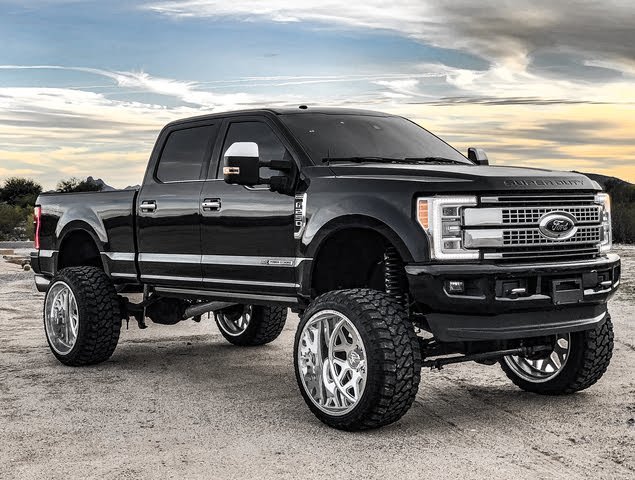
- Aggressive Aesthetic and Presence: There’s no denying the visual impact of a lifted truck. The elevated stance, combined with oversized tires and often aftermarket wheels, gives these vehicles a powerful, dominant presence that many owners find highly desirable. It’s a statement of ruggedness and capability.
- Improved Visibility: Sitting higher provides a better vantage point over traffic and obstacles, which can be advantageous in both urban driving and off-road scenarios.
- Customization and Personal Expression: Lifting a truck is often just the beginning of a customization journey. It allows owners to personalize their vehicle to reflect their individual style and specific needs, creating a unique machine that stands out from the crowd.
- Reliability and Aftermarket Support: Japanese manufacturers like Toyota, Nissan, Mitsubishi, and Suzuki are renowned for producing incredibly durable and reliable trucks. This inherent robustness makes them excellent platforms for modification, as their powertrains and chassis are designed to withstand significant abuse. Furthermore, the massive global popularity of these brands ensures a vast aftermarket industry dedicated to producing high-quality lift kits and accessories specifically for Japanese lifted trucks.
Key Players in the Japanese Lifted Truck Scene
While virtually any Japanese truck can be lifted, certain models have become iconic within the custom truck community:
- Toyota Tacoma/Hilux: Arguably the king of mid-size lifted trucks globally. Known for their legendary reliability, strong aftermarket support, and excellent off-road pedigree, these trucks are a go-to choice for enthusiasts looking to build capable trail rigs or show trucks.
- Nissan Frontier/Navara: Nissan’s contenders offer robust platforms and strong engines, making them popular choices for those seeking an alternative to Toyota with similar capabilities.
- Mitsubishi Triton/L200: A global workhorse, the Triton/L200 is a formidable platform for lifting, particularly in markets outside North America where it’s widely available.
- Toyota 4Runner/Land Cruiser: While SUVs, these vehicles share truck-based chassis and are incredibly popular for lifting, transforming them into ultimate overlanding and off-road exploration vehicles.
- Suzuki Jimny: A compact, highly capable 4×4, the Jimny gains significantly from a lift, enhancing its already impressive off-road prowess and giving it an even more aggressive, miniature-brute appearance.
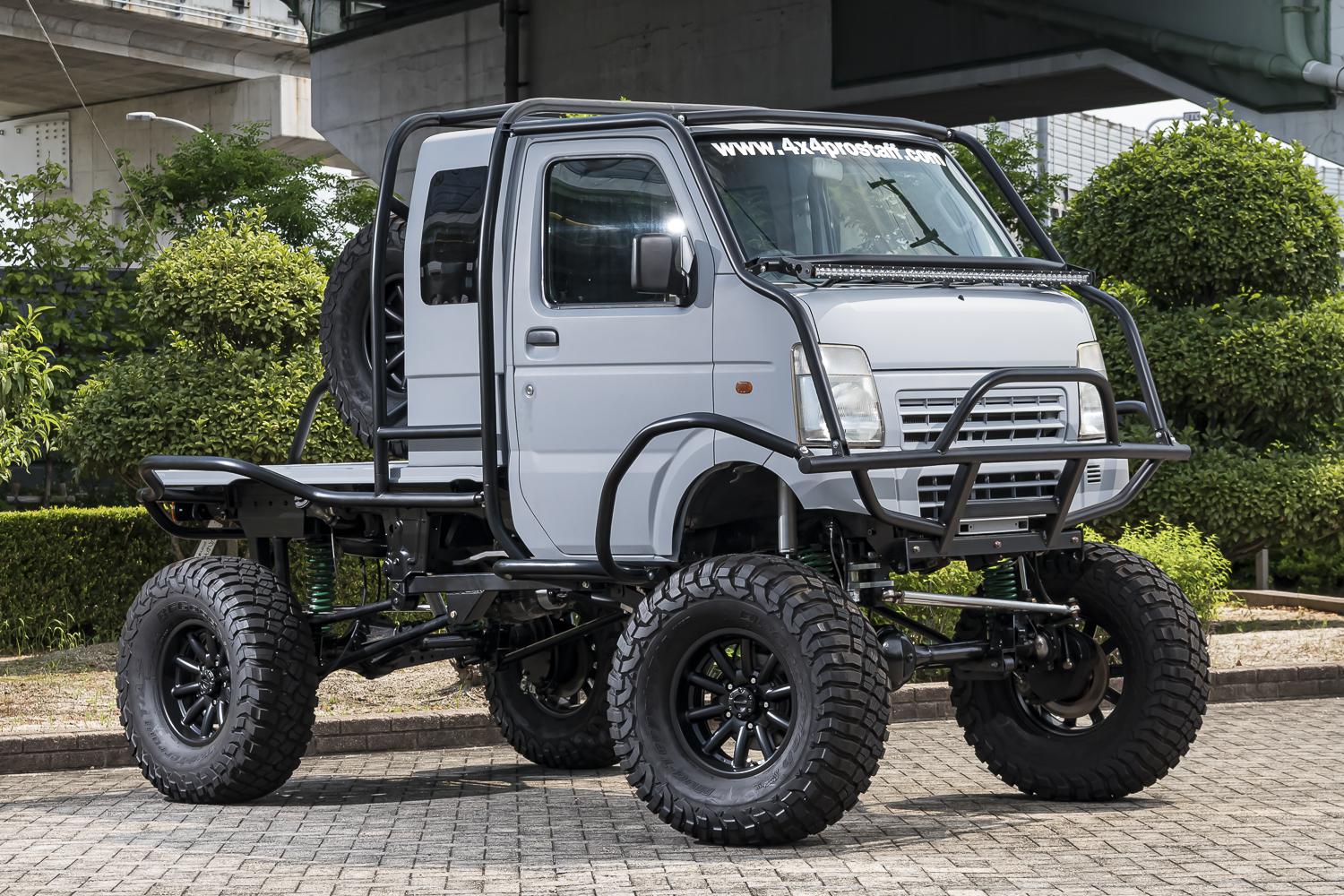
- Kei Trucks (e.g., Suzuki Carry, Honda Acty): A unique and increasingly popular sub-category. These diminutive Japanese mini-trucks, originally designed for utility in tight spaces, are lifted to create incredibly fun, quirky, and surprisingly capable small off-roaders, often used on farms or as novelty vehicles.
Understanding Lift Kits and The Modification Process
Lifting a Japanese truck involves more than just jacking it up. It requires a careful understanding of different lift kit types and their components:
- Suspension Lift Kits: These are the most common and effective type for off-road performance. They replace or modify components of the vehicle’s suspension system to increase ground clearance.
- Components: Taller coil springs, longer shocks, extended leaf springs (or blocks for leaf springs), new control arms (upper and lower) to correct suspension geometry, longer sway bar links, and sometimes drop brackets for differentials or transfer cases to correct driveline angles.
- Benefits: Improves articulation, allows for much larger tires, and generally provides better ride quality than body lifts.
- Body Lift Kits: These kits use spacers placed between the truck’s body and its frame, effectively raising the body without altering the suspension geometry.
- Components: Spacers, longer bolts, steering shaft extension.
- Benefits: More economical, simpler installation, retains factory ride quality, allows for slightly larger tires without changing suspension characteristics.
- Limitations: Does not increase ground clearance at the differentials, can expose the frame rails, and can look awkward if not done properly.
- Leveling Kits: A minor form of lift, these typically raise the front of the truck to match the factory rake (when the rear sits slightly higher than the front).
- Components: Spacers for the front coil springs or torsion bar keys.
- Benefits: Corrects aesthetic imbalance, allows for slightly larger tires in the front.
The Modification Process: Important Considerations
Before embarking on a lift project for your Japanese lifted truck, several critical factors must be weighed:
- Purpose and Budget: Determine if the truck is for serious off-roading, daily driving with a lifted look, or a balance of both. This will dictate the type and quality of the lift kit. Budgets can range from a few hundred dollars for a basic leveling kit to several thousands for a comprehensive long-travel suspension system.
- Professional Installation vs. DIY: While some simpler kits can be installed by experienced DIYers, complex suspension lifts often require specialized tools and expertise. Incorrect installation can lead to safety hazards, poor handling, and premature wear on components.
- Tire and Wheel Selection: This is crucial. Larger tires require specific wheel offsets and backspacing to prevent rubbing against fenders or suspension components. Tire type (all-terrain, mud-terrain) should align with the truck’s intended use.
- Drivetrain and Gearing: Lifting a truck and adding larger tires significantly increases the rotational mass and changes the effective gear ratio. This can lead to reduced acceleration, decreased fuel economy, and strain on the transmission. Re-gearing the differentials to a lower ratio is often recommended for optimal performance and longevity, especially for significant tire size increases.
- Steering and Alignment: Lifting alters steering geometry. Proper alignment is essential after installation to prevent uneven tire wear and maintain predictable handling. Upgraded steering components (e.g., tie rods, pitman arms) may be necessary for extreme lifts.
- Brake Lines and ABS: Longer brake lines may be required to accommodate the increased distance between the frame and calipers. ABS sensor wiring might also need to be extended.
- Legal Regulations: Check local laws regarding vehicle height, tire protrusion, and modifications. Some jurisdictions have strict rules that could make certain modifications illegal.
Challenges and Solutions:
- Driveline Vibrations: Common after lifting, especially with leaf-sprung trucks, due to altered driveshaft angles. Solutions include shims to adjust pinion angle, double-cardan driveshafts, or differential drop kits.
- Premature Wear on Components: Increased stress on ball joints, CV axles, and tie rods. Using high-quality aftermarket components designed for lifted applications can mitigate this.
- Reduced Ride Quality and Handling: Overly stiff springs or improper shock selection can lead to a harsh ride. Investing in quality shocks (e.g., adjustable coilovers) and proper spring rates for your truck’s weight can significantly improve ride comfort.
- Center of Gravity: A lifted truck has a higher center of gravity, making it more susceptible to rollovers, especially off-road or at higher speeds. Driving cautiously and being aware of the truck’s limits is paramount.
Tips for Owning and Maintaining a Lifted Japanese Truck
- Regular Inspections: Frequently check suspension components, steering linkages, tire pressure, and lug nuts, especially after off-road excursions.
- Proper Cleaning: After off-roading, clean mud and debris from the undercarriage to prevent corrosion and inspect for damage.
- Understand Off-Road Recovery: Learn proper recovery techniques and carry essential gear like a winch, recovery straps, and a shovel.
- Adjust Driving Style: Be mindful of the increased height when entering garages, parking structures, or driving under low-hanging obstacles. The handling characteristics will also be different from a stock truck.
- Insurance Implications: Inform your insurance provider about modifications. Some insurers may charge higher premiums or require specific coverage for heavily modified vehicles.
Price Table: Japanese Lifted Trucks (Estimated Ranges in USD)
Please note: Prices are highly variable based on vehicle year, mileage, condition, specific lift kit, additional modifications, and geographical location. This table provides estimated ranges for illustrative purposes.
| Truck Model/Type | Condition (Lift Level) | Estimated Truck Price Range (USD) | Estimated Lift Kit Price Range (USD) | Key Factors Affecting Price |
|---|---|---|---|---|
| Toyota Tacoma (Gen 2/3) | Stock (2010-2023) | $15,000 – $45,000+ | N/A | Year, mileage, trim level (SR5, TRD Off-Road, Pro) |
| Mild Lift (2-3") | $18,000 – $50,000+ | $500 – $2,500 | Kit quality (spacers vs. full suspension), tires/wheels | |
| Extreme Lift (4"+, Long Travel) | $25,000 – $60,000+ | $3,000 – $10,000+ | Custom fabrication, high-end components (coilovers, control arms) | |
| Toyota Hilux (Intl. Market) | Stock (New, depending on market) | $30,000 – $60,000+ | N/A | Region, engine type, trim level |
| Mild Lift (2-3") | $35,000 – $65,000+ | $800 – $3,000 | Similar to Tacoma, aftermarket support in specific regions | |
| Nissan Frontier (Gen 2/3) | Stock (2010-2023) | $10,000 – $35,000+ | N/A | Year, mileage, trim level (SV, Pro-4X) |
| Mild Lift (2-3") | $12,000 – $40,000+ | $400 – $2,000 | Kit quality, tires/wheels | |
| Mitsubishi Triton/L200 | Stock (Intl. Market, New) | $25,000 – $50,000+ | N/A | Region, engine type, trim level |
| Mild Lift (2-3") | $28,000 – $55,000+ | $700 – $2,800 | Aftermarket availability varies by market | |
| Suzuki Jimny (Gen 3/4) | Stock (2000-2023, depending on market) | $8,000 – $30,000+ | N/A | Year, mileage, condition, import costs (for Gen 4 in some regions) |
| Mild Lift (2-3") | $10,000 – $35,000+ | $600 – $2,500 | Jimny lifts are very popular, many specialized kits | |
| Kei Truck (Suzuki Carry, Honda Acty) | Stock (Used, 1990s-2010s) | $4,000 – $10,000 | N/A | Age, condition, import fees |
| Mild Lift (2-4") | $5,000 – $12,000 | $300 – $1,500 | Basic suspension components, often custom fabrication | |
| Lift Kit Installation (Labor) | Basic Leveling/Body Lift | N/A | $200 – $600 | Shop rates, complexity of kit |
| Full Suspension Lift | N/A | $600 – $1,500+ | Shop rates, alignment, additional adjustments |
Conclusion
Japanese lifted trucks represent a powerful synergy of engineering excellence and passionate customization. Their inherent reliability and robust construction provide an ideal foundation for modifications that enhance both off-road capability and visual appeal. Whether it’s a towering Toyota Hilux ready for an overland expedition, a nimble Suzuki Jimny tackling rocky trails, or a quirky lifted Kei truck charming onlookers, these vehicles embody a spirit of adventure and individuality. With careful planning, a clear understanding of the modification process, and a commitment to proper maintenance, owning a lifted Japanese truck can be an incredibly rewarding experience, offering unparalleled freedom and a unique connection to the open road—or the path less traveled.
Frequently Asked Questions (FAQ) about Japanese Lifted Trucks
Q1: Is lifting a truck legal?
A1: Legality varies widely by state, province, or country. Many jurisdictions have specific laws regarding maximum vehicle height, bumper height, tire protrusion, and light placement. Always check your local Department of Motor Vehicles or equivalent regulatory body’s guidelines before modifying your truck.
Q2: Does lifting a truck affect its reliability?
A2: A properly installed, high-quality lift kit with appropriate complementary modifications (like re-gearing for larger tires) should not significantly compromise the inherent reliability of a Japanese truck. However, a poorly installed or cheap kit can accelerate wear on components like ball joints, CV axles, and tie rods. Extreme lifts can also put more stress on the drivetrain. Regular maintenance and inspections are crucial.
Q3: What’s the difference between a body lift and a suspension lift?
A3: A body lift raises the truck’s body off the frame using spacers, increasing fender clearance for larger tires but not increasing ground clearance at the axles. A suspension lift modifies the actual suspension components (springs, shocks, control arms) to raise the entire chassis, increasing both fender clearance and ground clearance at the differentials. Suspension lifts are generally preferred for off-road performance.
Q4: What tires should I use for my Japanese lifted truck?
A4: The best tire choice depends on your primary use.
- All-Terrain (A/T) tires are a good compromise for mixed on-road and off-road driving, offering decent traction without excessive road noise.
- Mud-Terrain (M/T) tires provide superior grip in mud, rocks, and loose dirt but can be noisy and less comfortable on pavement.
- Consider the tire size that fits your lift without rubbing, as well as the load rating appropriate for your truck.
Q5: Will lifting my truck void its warranty?
A5: Modifying your vehicle with aftermarket parts can potentially void parts of your factory warranty. Under the Magnuson-Moss Warranty Act in the U.S., a manufacturer generally cannot void a warranty simply because an aftermarket part was used, unless they can prove that the aftermarket part caused the failure. However, if a lift kit or related modification directly leads to the failure of a covered component (e.g., suspension or drivetrain), the manufacturer may deny a warranty claim for that specific failure. It’s always best to discuss potential warranty implications with your dealership before making significant modifications.
Q6: How much does it cost to lift a Japanese truck?
A6: The cost varies significantly. A basic leveling kit might cost $200-$500 for parts. A comprehensive suspension lift kit can range from $500 to $5,000 or more, depending on the brand, quality, and extent of the lift. Installation labor can add another $200-$1500+. Don’t forget to factor in the cost of larger tires and potentially new wheels, which can easily add another $1,000-$4,000+. For a complete custom build with extreme lifts and high-end components, costs can climb well into the tens of thousands.