Lifted Trucks Jack: Your Essential Guide to Safe and Effective Lifting
Lifted Trucks Jack: Your Essential Guide to Safe and Effective Lifting
The roar of a powerful engine, the imposing stance, and the ability to conquer challenging terrain – these are just a few reasons why lifted trucks captivate enthusiasts worldwide. However, with increased ground clearance and larger tires comes a unique set of challenges, especially when it comes to routine maintenance, tire changes, or off-road recovery. This is where the specialized lifted trucks jack becomes not just a tool, but an absolute necessity.
Standard automotive jacks are simply not designed to reach the elevated jacking points of a lifted truck, nor do they possess the stability and capacity often required. A dedicated jack for lifted trucks is engineered to provide the necessary height, robust support, and safety features essential for working on these formidable vehicles. Without the right equipment, what should be a straightforward task can quickly become a dangerous and frustrating ordeal. This comprehensive guide will delve into everything you need to know about selecting, using, and maintaining the ideal jack for your lifted truck, ensuring both efficiency and, most importantly, safety.
Understanding the Unique Challenges of Lifting Lifted Trucks
Before exploring the types of jacks available, it’s crucial to understand why a standard jack falls short:
- Increased Ground Clearance: The most obvious challenge. A lifted truck’s frame and axles are significantly higher off the ground, rendering most conventional floor jacks and bottle jacks incapable of reaching critical jacking points.
- Larger, Heavier Tires: Bigger tires mean more unsprung weight, which can make lifting more demanding and require greater stability from the jack.
- Heavier Overall Vehicle Weight: Many lifted trucks are also equipped with heavy-duty bumpers, winches, armor, and other accessories that add considerable weight, demanding jacks with higher lifting capacities.
- Uneven Terrain (Off-Road): While a garage floor offers a stable, flat surface, off-road recovery often requires jacking on soft, uneven, or sloped ground, necessitating jacks with specific design considerations for stability in such conditions.
- Suspension Travel: When lifting a truck by its frame, the suspension can droop significantly, increasing the required lift height before the tire even clears the ground.
These factors highlight why investing in a specialized jack for your lifted truck isn’t a luxury, but a fundamental requirement for responsible ownership.
Types of Jacks for Lifted Trucks
Choosing the right jack depends heavily on your specific needs, the type of lift on your truck, and whether you’ll be using it primarily in a garage or out on the trails.
1. Hi-Lift Jack (Farm Jack)
Often synonymous with off-road recovery, the Hi-Lift jack is a mechanical marvel known for its impressive reach and versatility.
- How it Works: It uses a ratcheting mechanism on a long steel beam to lift heavy objects incrementally. The lifting nose hooks under a sturdy jacking point.
- Pros:
- Exceptional Lift Height: Can lift several feet, easily clearing even the most extreme lifts.
- Versatility: Beyond lifting, it can be used for winching, clamping, spreading, and even as a manual press.
- Off-Road King: Ideal for changing tires on uneven terrain or extricating a stuck vehicle by lifting it out of ruts or off obstacles.
- No Hydraulics: No fluid to leak, making it reliable in extreme temperatures.
- Cons:
- Instability: Can be inherently unstable, especially at maximum extension. Requires careful placement and technique.
- Danger: If not operated correctly, it can be extremely dangerous. The handle can kick back violently.
- Specific Jacking Points: Requires a solid jacking point (steel bumper, rock slider, specific Hi-Lift points) that can withstand concentrated pressure.
- Heavy and Bulky: Can be cumbersome to store and carry.
2. Hydraulic Bottle Jack
Compact yet powerful, bottle jacks are a popular choice for their high lifting capacity in a small footprint.
- How it Works: A hydraulic cylinder uses fluid pressure to extend a ram, lifting the load.
- Pros:
- High Lifting Capacity: Excellent for heavy trucks, often ranging from 6 to 20 tons.
- Compact Size: Easy to store in a toolbox or behind the seat.
- Relatively Stable: Offers good stability on flat, firm surfaces.
- Relatively Affordable: Good value for their capacity.
- Cons:
- Limited Lift Height: While better than standard jacks, they often require extensions or a multi-stage design to reach the frame of very tall lifted trucks.
- Not Ideal for Off-Road: Can sink into soft ground and are less stable on uneven surfaces compared to air jacks.
- Can Leak: Hydraulic fluid can leak over time or with damage.
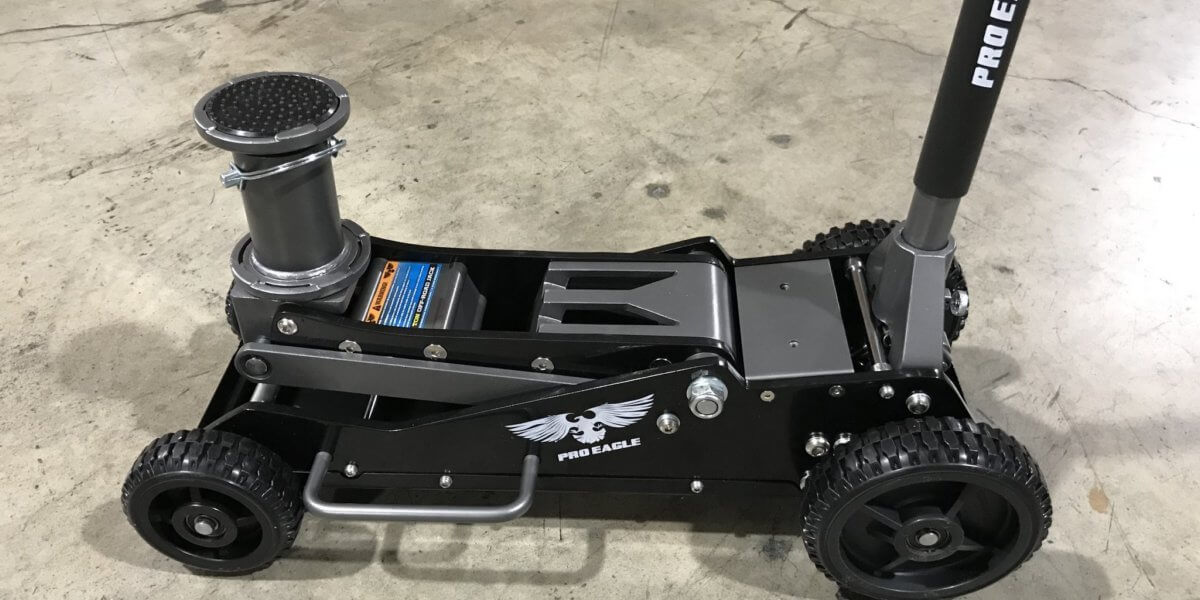
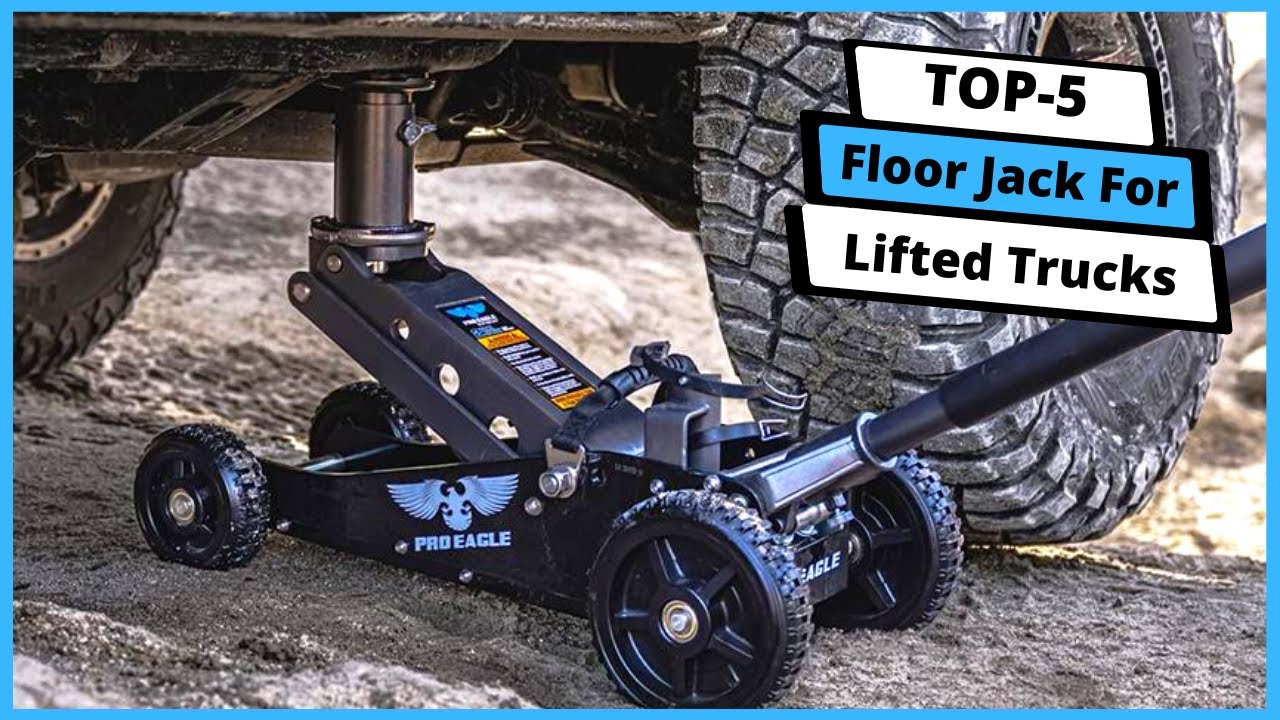
3. Heavy-Duty / Long-Reach Floor Jack (Service Jack)
For garage use, a specialized long-reach floor jack is often the safest and most convenient option.
- How it Works: Similar to a standard floor jack but with a much longer arm and higher lift height, allowing it to reach deep under a lifted truck’s frame or differential.
- Pros:
- Exceptional Stability: Wide base and smooth rolling wheels make it very stable on flat surfaces.
- Ease of Use: Smooth hydraulic operation and often a quick-lift mechanism.
- High Capacity: Designed for heavy vehicles, often 3-5 tons.
- Precision: Allows for fine control during lifting and lowering.
- Cons:
- Not Portable: Very heavy and bulky, making them impractical for off-road use.
- Expensive: These specialized jacks come at a higher price point.
- Garage-Specific: Requires a flat, hard surface to operate effectively.
4. Air Jacks / Exhaust Jacks
These unique jacks are particularly useful in challenging off-road conditions.
- How it Works: An inflatable bag connects to your vehicle’s exhaust pipe (exhaust jack) or an air compressor (air jack) to inflate, lifting the vehicle.
- Pros:
- Excellent for Soft Terrain: The large footprint prevents sinking in sand, mud, or snow.
- High Capacity: Can lift very heavy vehicles.
- Stable on Uneven Ground: Conforms to the terrain, providing a stable lift.
- Safe Lifting: Lifts the entire side of the vehicle, reducing stress points.
- Cons:
- Puncture Risk: Vulnerable to sharp objects.
- Requires Exhaust/Compressor: Dependent on another power source.
- Slow Operation: Can take time to inflate and deflate.
- Bulkier than Bottle Jacks: Takes up more space when deflated.
5. Jack Stands (Essential Safety Equipment)
While not a jack itself, jack stands are non-negotiable for safety. Never work under a vehicle supported solely by a jack. Always lift with a jack, then immediately place jack stands under a solid part of the frame or axle before beginning any work. For lifted trucks, ensure you get tall enough jack stands with adequate weight capacity.
Choosing the Right Jack for Your Lifted Truck
Making the right choice involves considering several critical factors:
- Required Lift Height: Measure the distance from the ground to your truck’s frame or axle where you plan to jack it up. Account for suspension droop and tire clearance. Your jack’s maximum lift height must exceed this measurement.
- Lifting Capacity: Your jack must be rated to lift at least the heaviest corner of your truck. As a rule of thumb, choose a jack with a capacity that is at least three-quarters of your truck’s Gross Vehicle Weight Rating (GVWR) if you plan to lift the entire front or rear, or half the GVWR if lifting one corner. Err on the side of caution and go higher.
- Primary Application:
- Garage/Shop Use: A heavy-duty, long-reach floor jack or a high-capacity bottle jack with extensions is ideal for stability and ease of use.
- Off-Road/Trail Recovery: A Hi-Lift jack is almost indispensable, often supplemented by a compact bottle jack or an air jack for specific situations.
- Stability: Always prioritize stability. A wider base, solid construction, and a reliable locking mechanism are key.
- Portability and Storage: If you need a jack for trail use, consider its weight and how easily it can be mounted or stored in your vehicle.
- Budget: While cost is a factor, compromise on quality or safety features. A good jack is an investment in your safety and the longevity of your vehicle.
How to Safely Jack Up a Lifted Truck (A Step-by-Step Guide)
Safety is paramount when working with lifted trucks. Follow these steps meticulously:
-
Preparation is Key:
- Flat, Level Surface: Always park your truck on the firmest, most level ground possible. If off-road, use a Hi-Lift base plate or flat rocks under the jack.
- Chock Wheels: Place wheel chocks on the wheels that will remain on the ground to prevent any movement.
- Engage Parking Brake: Ensure the parking brake is fully engaged.
- Transmission in Park/Gear: Put the automatic transmission in Park, or a manual transmission in first or reverse gear.
- Personal Safety: Wear sturdy gloves and safety glasses.
- Locate Jacking Points: Consult your truck’s manual or an off-road forum to identify safe, strong jacking points. These are typically the frame rails, solid axle housing, or reinforced rock sliders/bumpers. Never jack on suspension components, differentials (unless specifically designed for it), or body panels.
-
Using a Hi-Lift Jack:
- Base Placement: Ensure the jack’s base is on a solid, non-slip surface. Use a Hi-Lift base if on soft ground.
- Jacking Point Engagement: Position the lifting nose securely under a solid jacking point.
- Lifting: With firm, controlled strokes, pump the handle up and down to raise the truck. Keep your body clear of the handle’s swing path. Never put any part of your body between the handle and the beam.
- Lowering: Once raised, move the reversing latch to the "down" position and slowly work the handle up and down to lower the truck incrementally. Maintain a firm grip.
-
Using a Bottle Jack or Floor Jack:
- Positioning: Slide the jack under the designated jacking point. For floor jacks, ensure the handle has enough room to pump. For bottle jacks, ensure it’s centered.
- Lifting: Pump the handle to raise the truck. Monitor the jack’s stability and the truck’s movement.
- Lowering: Slowly open the release valve (usually by twisting the handle or a separate knob) to lower the truck.
-
Crucial Step: Always Use Jack Stands:
- Once the truck is lifted to the desired height, immediately slide appropriately rated jack stands under solid support points (frame, axle housing) near the jack.
- Lower the truck slowly until its weight rests securely on the jack stands. The jack can then be removed, or left in place as an additional safety measure (but not bearing the full weight).
-
Lowering the Truck Safely:
- If using the jack for support, slowly raise the truck slightly to remove the jack stands.
- Ensure the area is clear of tools and personnel.
- Slowly lower the truck completely to the ground using the jack’s release mechanism.
- Remove wheel chocks.
Maintenance and Care for Your Lifted Truck Jack
Proper maintenance extends the life of your jack and ensures its reliability:
- Hi-Lift Jacks: Keep the mechanism clean and lubricated with a dry lubricant or paraffin wax. Check for bent pins, worn springs, or damaged handles.
- Hydraulic Jacks (Bottle & Floor): Check hydraulic fluid levels periodically (consult your manual) and top off if necessary with appropriate hydraulic jack oil. Inspect for leaks, rust, or damage to the ram or seals. Store in a clean, dry place.
- General: Clean dirt and debris after use. Inspect all components for cracks, bends, or excessive wear. Store your jack properly to prevent damage.
Common Challenges and Solutions
- Instability: Always use the widest base possible. For Hi-Lifts, use a dedicated base plate on soft ground. For hydraulic jacks, ensure the ground is firm and level. Always use jack stands.
- Insufficient Lift Height: Purchase a jack with adequate maximum lift. For bottle jacks, consider a model with a screw extension or purchase a sturdy, purpose-built jack extension.
- Access to Jacking Points: Some aftermarket bumpers or skid plates can make jacking points harder to reach. Consider using adapters or opting for a long-reach floor jack in the garage.
- Sinking in Soft Ground: An air jack is ideal for these conditions. For Hi-Lifts and bottle jacks, a wide, flat base plate (plywood, purpose-built base) is essential.
Practical Advice and Actionable Insights
- Never skimp on safety. Always invest in high-quality jacks and jack stands.
- Practice makes perfect. If you’re new to using a Hi-Lift jack, practice in a safe environment without your truck first, or with close supervision, to get a feel for its operation.
- Know your truck. Understand its weight, center of gravity, and designated jacking points.
- Carry the right tools. If you venture off-road, ensure your recovery kit includes a jack appropriate for your lifted truck, along with a base plate and jack stands (if space allows).
- Regular inspection. Before each use, quickly inspect your jack for any signs of damage or malfunction.
Conclusion
The world of lifted trucks offers unparalleled adventure and capability, but it also demands a commitment to safety and the right tools. A specialized lifted trucks jack is an indispensable piece of equipment for any owner, ensuring that maintenance, tire changes, and off-road recovery can be performed safely and effectively. By understanding the different types of jacks, choosing the one that best fits your needs, and adhering strictly to safe operating procedures, you empower yourself with the knowledge and equipment to confidently tackle any challenge your lifted truck might present. Invest wisely, operate safely, and enjoy the full potential of your magnificent machine.
Price Table: Lifted Trucks Jack Overview
| Jack Type | Typical Lifting Capacity | Max Lift Height (Approx.) | Key Features | Price Range (USD) |
|---|---|---|---|---|
| Hi-Lift Jack | 7,000 lbs (3.5 tons) | 48" – 60" | Mechanical, versatile (winch, clamp), high reach, off-road focused | $100 – $250 |
| Hydraulic Bottle Jack | 6 – 20 tons | 15" – 25" (without ext.) | Compact, high capacity, relatively stable on firm ground | $50 – $200 |
| Heavy-Duty Floor Jack | 3 – 5 tons | 20" – 30"+ | Long reach, high stability, smooth hydraulic operation, garage-specific | $200 – $800+ |
| Air / Exhaust Jack | 4,000 – 8,000 lbs | 24" – 30" | Inflatable bag, excellent for soft terrain, stable on uneven ground | $150 – $400 |
| Jack Stands (Pair) | 6 – 12 tons | 20" – 30"+ | Essential safety device, ratcheting or pin lock, high capacity for lifted trucks | $50 – $200 |
Note: Prices are approximate and can vary based on brand, features, and retailer.
Frequently Asked Questions (FAQ) about Lifted Trucks Jacks
Q1: Can I use a regular car jack on my lifted truck?
A: Generally, no. Regular car jacks typically lack the necessary lift height to reach the jacking points on a lifted truck. They also often have insufficient weight capacity and stability for heavier, taller vehicles, making them unsafe for this application.
Q2: What’s the safest type of jack for a lifted truck?
A: For garage use, a heavy-duty, long-reach floor jack is often considered the safest due to its wide, stable base and controlled hydraulic action. For off-road, while a Hi-Lift is versatile, it requires extreme caution. Regardless of the jack type, always use appropriately rated jack stands to support the truck’s weight once lifted; the jack should never be the sole support when working underneath.
Q3: How do I know what lifting capacity jack I need for my lifted truck?
A: Check your truck’s Gross Vehicle Weight Rating (GVWR), usually found on a sticker inside the driver’s side door jamb. Your jack’s capacity should ideally be at least 75% of the GVWR if you plan to lift one end (front or rear), or at least 50% if you’re only lifting one corner. It’s always safer to choose a jack with a higher capacity than you think you’ll need.
Q4: Where are the best jacking points on a lifted truck?
A: Safe jacking points include the frame rails (especially near the axles), solid axle housings, and robust aftermarket components like steel bumpers, rock sliders, or specific recovery points designed for jacking. Always consult your truck’s owner’s manual or an expert for your specific model. Avoid jacking on suspension components (unless specifically designed for it), differentials (unless approved), or thin sheet metal.
Q5: Are Hi-Lift jacks dangerous?
A: Hi-Lift jacks can be dangerous if not used correctly. Their mechanical ratcheting action can cause the handle to kick back violently if not held firmly or if the load shifts. Instability, especially on soft or uneven ground, is another risk. Always read the manual, practice safe operation, use a base plate on soft ground, wear gloves, and keep clear of the handle’s path. Never work under a vehicle supported only by a Hi-Lift jack.
Q6: Do I really need jack stands if I’m only changing a tire?
A: Yes, absolutely. Even for a quick tire change, a jack can fail due to hydraulic leak, mechanical failure, or instability. Jack stands provide a crucial secondary layer of support, preventing the truck from falling and potentially causing severe injury or death. It’s a non-negotiable safety step.