Lifted Trucks BeamNG: Conquering Virtual Terrains with Custom Rigging
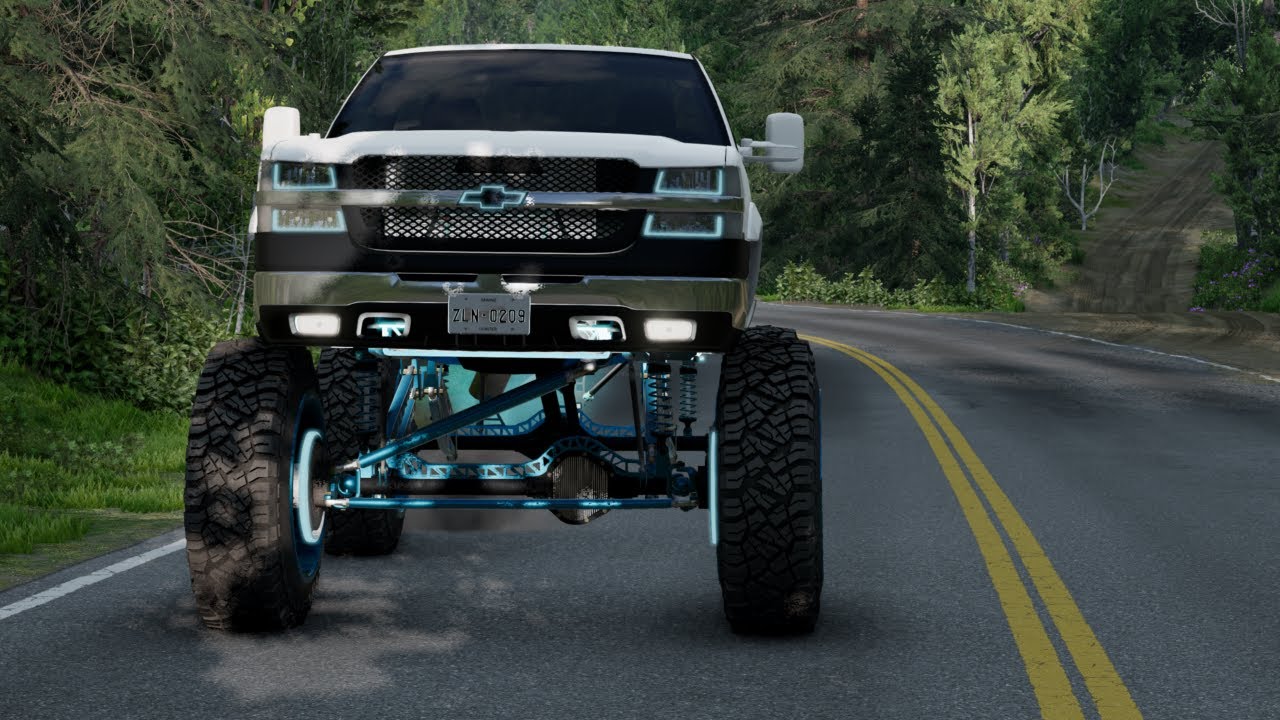
Lifted Trucks BeamNG: Conquering Virtual Terrains with Custom Rigging
Introduction: Ascending to New Heights in Virtual Off-Roading
BeamNG.drive is renowned for its incredibly realistic soft-body physics engine, allowing players to experience automotive deformation and driving dynamics like no other game. Within this highly detailed simulation, a vibrant subculture thrives: the world of lifted trucks BeamNG. Far more than just a cosmetic alteration, lifting a truck in BeamNG.drive transforms it into a formidable off-road machine, capable of tackling terrains that would crumple standard vehicles.
Lifted trucks in BeamNG.drive represent the pinnacle of virtual customization and extreme off-road capability. They are vehicles modified with increased ground clearance, often achieved through suspension lifts, larger tires, and reinforced components. This not only dramatically alters their appearance but, crucially, enhances their performance over obstacles, through mud, and across rocky trails. The importance of lifted trucks in BeamNG lies in their ability to push the boundaries of the game’s physics, offering players a deeply engaging and challenging experience in vehicle building, tuning, and extreme driving. Whether you’re a seasoned off-roader or a newcomer to the virtual dirt, understanding and mastering lifted trucks in BeamNG opens up a world of unparalleled automotive exploration and destruction.
What are Lifted Trucks in BeamNG.drive? The Physics of Height
In BeamNG.drive, a "lifted truck" refers to a vehicle, typically a pickup truck or SUV, that has had its suspension modified to raise its body higher off the ground, often coupled with the installation of larger-diameter tires. Unlike many other racing games where vehicle modifications are purely aesthetic or have simplified performance impacts, BeamNG’s advanced physics engine means that every change to a vehicle, especially a lift, has profound and realistic consequences.
When you lift a truck in BeamNG, you’re not just moving a slider; you’re altering the vehicle’s center of gravity, suspension geometry, weight distribution, and tire contact patches. This translates to:
- Increased Ground Clearance: The primary benefit, allowing the truck to clear larger obstacles without scraping its undercarriage.
- Improved Approach, Departure, and Breakover Angles: These crucial off-road metrics dictate how steep an incline a vehicle can climb, descend, or crest without its bumpers or belly dragging.
- Accommodation for Larger Tires: Larger tires provide more traction, a larger footprint for distributing weight, and often contribute further to ground clearance.
- Altered Driving Dynamics: A higher center of gravity naturally leads to more body roll and a greater propensity for tipping over, demanding careful driving and tuning.
The realism in BeamNG means that building and driving a lifted truck is a hands-on learning experience. Players must consider how each component interacts, from spring rates and shock damping to tire pressure and differential settings, to create a stable yet capable off-road beast.
The Appeal of Virtual Lift Kits: Why Go High in BeamNG?
The allure of lifted trucks in BeamNG.drive extends beyond mere aesthetics. There are several compelling reasons why players invest time and effort into creating these towering machines:
- Unmatched Off-Road Capability: This is the primary draw. Lifted trucks can navigate environments that are impassable for stock vehicles. From rock crawling over jagged boulders to plowing through deep mud pits, the increased clearance and articulation open up new dimensions of gameplay.
- Deep Customization and Engineering: BeamNG offers an incredible level of detail in vehicle customization. Players can experiment with different suspension types (leaf springs, coilovers, independent setups), adjust spring rates, damping, bump stops, and even fine-tune steering geometry. This engineering challenge is immensely satisfying.
- Realistic Physics Exploration: Building a lifted truck is a fantastic way to explore BeamNG’s physics engine. Witnessing the suspension articulate over uneven terrain, the tires deform under load, and the chassis flex and twist provides an educational and entertaining experience.
- Aesthetic Appeal and Role-Playing: For many, the look of a massive, lifted truck is inherently cool. It allows for creative expression, building fantasy rigs, or replicating real-world monster trucks. This can lead to engaging role-playing scenarios, whether it’s simulating an overland expedition or participating in a virtual monster truck rally.
- Community and Modding Scene: The BeamNG community thrives on user-created content. There are countless mods available, from pre-built lifted trucks to individual suspension components and massive tire packs. This fosters a collaborative environment where players share creations, tips, and challenges.
- Challenge and Skill Development: Driving a highly lifted truck requires skill and finesse. Managing the high center of gravity, understanding weight transfer, and applying precise throttle and steering inputs over extreme terrain is a rewarding challenge that improves a player’s virtual driving abilities.
Getting Started: How to Create and Drive Lifted Trucks in BeamNG
Embarking on your lifted truck journey in BeamNG.drive is an exciting process that can range from simple installations to complex custom builds.
1. Using Existing Mods and Repository Vehicles:
The easiest way to get started is by downloading pre-built lifted trucks or lift kit packages from the official BeamNG.drive repository or trusted third-party mod sites.
- Access the Repository: In-game, navigate to "Repository" from the main menu. Use the search function or browse categories like "Vehicles" or "Parts" to find relevant mods.
- Install Mods: Once downloaded, activate them through the in-game mod manager.
- Spawn and Drive: Select a vehicle, then navigate to the "Parts" selector (usually ‘Ctrl+W’ by default) to apply the lift kit or select the pre-lifted variant.
2. Applying Official Parts and Customizing:
Many stock BeamNG vehicles (like the Gavril D-Series pickup or the Gavril Roamer SUV) have official "lifted" or "off-road" suspension components available in the parts selector.
- Select Your Vehicle: Spawn a stock truck.
- Open Parts Selector (Ctrl+W): Go to the "Suspension" section.
- Choose Lifted Components: Look for options like "Off-Road Suspension," "Heavy Duty Springs," or specific lift kit options. You might also find larger wheel and tire options.
- Adjust and Fine-Tune: Once a basic lift is applied, delve deeper into the "Tuning" menu (usually ‘Ctrl+W’ then click ‘Tune’ button). Here, you can adjust:
- Spring Rates: How stiff the springs are.
- Damping: How quickly the shocks absorb bumps.
- Ride Height: Fine-tune the height within limits.
- Camber/Toe: Crucial for tire wear and stability.
- Differential Lockers: Essential for off-road traction.
- Tire Pressure: Affects grip and deformation.
3. Advanced Customization (BeamNG’s Node-Beam Editor):
For the truly adventurous, BeamNG allows direct manipulation of the vehicle’s node-beam structure. This is highly complex and typically reserved for mod creators, but it offers ultimate control. It involves editing JBeam files to alter suspension points, beam lengths, and component properties. This is where truly unique and extreme lifts are born.
Testing and Practice:
Once your lifted truck is built, take it to various off-road maps (like "Utah, USA" or "Jungle Rock Island") to test its capabilities. Experiment with different settings and learn how the truck behaves under various conditions.
Key Considerations for Building Your Ultimate Lifted Rig
Building a high-performing lifted truck in BeamNG isn’t just about adding height; it’s about balance and understanding physics.
- Center of Gravity (CoG): Lifting a truck significantly raises its CoG, making it more prone to rolling over, especially at speed or on side slopes. Counteract this with wider wheel tracks (offset wheels) and careful suspension tuning.
- Suspension Geometry: When you lift a vehicle, you alter the angles of its suspension components. This can lead to issues like "bump steer" (where the wheels steer themselves over bumps) or excessive positive camber (wheels tilting outwards at the top). Proper tuning, including adjusting control arm lengths and tie-rod angles (if possible in-game), is crucial.
- Drivetrain Stress: Larger tires and increased articulation put more stress on axles, driveshafts, and differentials. While BeamNG simulates this to some extent, it’s more about how the vehicle handles the power transfer rather than outright breaking components (though components can break from impact).
- Tire Selection: Tire size, width, and tread pattern are critical. Larger, wider tires with aggressive treads provide superior off-road grip but can increase rolling resistance and make steering heavier.
- Spring Rates and Damping: These are the heart of your suspension. Stiffer springs prevent excessive body roll and bottoming out, but too stiff, and the ride becomes harsh, and articulation suffers. Damping controls how quickly the suspension reacts to bumps and rebounds.
- Frame Flex and Chassis Integrity: Extreme lifts can sometimes expose weaknesses in the virtual vehicle’s frame, leading to more noticeable flex or even damage during hard impacts or twists. Some mods incorporate reinforced frames to mitigate this.
Types of Lifted Builds and Suspension Systems
Lifted trucks in BeamNG can be categorized by their lift height and the type of suspension system employed:
By Lift Height:
- Mild Lift (1-3 inches virtual): Primarily for aesthetics and accommodating slightly larger tires. Offers a small improvement in off-road capability without significantly compromising road manners or stability.
- Moderate Lift (4-8 inches virtual): A popular choice for serious off-roading. Provides substantial ground clearance and allows for large tires, making it capable on most trails. Requires more careful tuning to maintain stability.
- Extreme Lift (8+ inches virtual): Often seen in "monster truck" or "mega truck" builds. Designed for maximum clearance and tire size, capable of crushing obstacles and traversing extremely difficult terrain. These builds are highly unstable at speed and require expert driving and tuning.
By Suspension System (and their virtual implications):
- Leaf Spring Suspension (e.g., Gavril D-Series rear): Durable and capable of handling heavy loads. Offers good articulation when properly set up but can be less refined than coil springs.
- Coil Spring Suspension (e.g., Gavril Roamer front): More comfortable ride and generally better articulation than leaf springs. Can be easier to adjust ride height.
- Coilover Suspension: Combines a coil spring and shock absorber into one unit. Offers precise tuning for ride height, spring rate, and damping. Common in high-performance off-road builds.
- Independent Front Suspension (IFS): Each front wheel moves independently. Offers better ride quality and handling on pavement. Can limit articulation compared to solid axles in extreme off-roading.
- Solid Axle Suspension: Both wheels on an axle are connected by a rigid beam. Provides excellent articulation and durability for off-road but can be less comfortable on-road. Many extreme BeamNG off-road builds swap IFS for solid axles for superior rock crawling.
Tips for Mastering Off-Roading with Lifted Trucks
Driving a lifted truck effectively in BeamNG requires patience and technique.
- Throttle Control is Key: Feather the throttle, especially over uneven terrain or when climbing. Smooth, consistent power delivery prevents wheelspin and sudden loss of traction, which can lead to rollovers.
- Steering Input: Avoid sudden, sharp steering inputs, particularly at speed or on side slopes. Gentle, deliberate steering is crucial for maintaining stability with a high center of gravity.
- Utilize Differential Lockers: For maximum traction in slippery or uneven conditions, engage your differential lockers (usually ‘Q’ and ‘E’ for front/rear, or ‘Shift+Q’/’Shift+E’ for center). Remember to disengage them on high-traction surfaces or during tight turns to prevent drivetrain bind.
- Understand Weight Transfer: Pay attention to how the truck’s weight shifts. When climbing, weight transfers to the rear; when descending, it shifts to the front. Use this knowledge to your advantage to maintain traction and stability.
- Recovery Gear (Virtual): Many off-road maps in BeamNG include winch points or allow for custom winch setups. Learn how to use a winch to recover your truck from sticky situations.
- Scout Your Path: Before tackling a difficult obstacle, take a moment to assess the terrain. Look for the best line, identify potential hazards, and plan your approach and departure.
- Experiment with Tire Pressure: Lowering tire pressure (in the tuning menu) can increase the tire’s contact patch, providing better grip on soft surfaces like sand or mud. Remember to "reinflat" for higher speeds.
Challenges and Solutions in BeamNG’s Lifted Truck Scene
While exhilarating, lifted trucks in BeamNG come with their own set of challenges.
- Challenge: Instability and Rollovers:
- Solution: Widen your track width with wheel spacers or negative offset wheels. Lower your CoG slightly if possible (e.g., by using less extreme lifts). Tune your suspension for stiffer anti-roll bars or sway bars, and adjust damping for better body control. Drive slower and more deliberately.
- Challenge: Drivetrain Breakage/Damage:
- Solution: Avoid excessive wheelspin and hard landings. Ensure your power delivery is smooth. Some advanced mods offer "heavy duty" drivetrain components.
- Challenge: Mod Conflicts and Performance Issues:
- Solution: Only install mods from reputable sources (like the official repository). Check mod descriptions for compatibility. If performance drops, try reducing graphic settings or disabling less essential mods. Regularly clear your game cache.
- Challenge: Tuning Complexity:
- Solution: Start with simple adjustments. Watch community tutorials. Use the "Vehicle Debug" app in-game (under ‘UI Apps’) to visualize suspension travel and CoG. Don’t be afraid to experiment and take notes.
- Challenge: Realism vs. Playability:
- Solution: BeamNG allows for a spectrum of realism. If extreme realism is too challenging, opt for mods that balance capability with user-friendliness. The game is about fun, so find your sweet spot.
Virtual Modding Cost/Complexity Table for Lifted Trucks BeamNG
It’s important to clarify that "price" in the context of BeamNG.drive is not monetary. This table reflects the virtual cost in terms of effort, system resources, technical understanding required, and potential impact on game stability or performance.
| Mod Type/Build Category | Description | "Virtual Cost" (Effort/Resources) | Key Benefits | Potential Challenges | Ideal For |
|---|---|---|---|---|---|
| Mild Lift (Official Parts) | Using in-game parts selector to add slightly taller suspension, larger wheels/tires. | Low (Easy) | Minor aesthetic improvement, slightly better clearance, stable. | Limited height increase, basic customization. | New players, casual off-roading, improved stock look. |
| Repository Mod (Pre-built) | Downloading and installing a pre-designed lifted truck or comprehensive lift kit from the official BeamNG repository. | Medium (Moderate) | Ready-to-drive unique designs, significant lift, often well-tuned. | Mod conflicts possible, varying quality/realism, potential for minor bugs. | Players seeking specific lifted vehicles, good starting point for learning. |
| Custom Lift (Manual Tuning) | Manually adjusting suspension parameters (springs, shocks, ride height, camber, etc.) on a stock or modded vehicle. | Medium-High (Advanced) | Fine-tuned performance, tailored to specific driving styles/terrains. | Requires understanding of physics, can easily create unstable vehicles. | Enthusiasts wanting to optimize performance, learning suspension dynamics. |
| Extreme Lift (JBeam/Complex Modding) | Creating or heavily modifying vehicle JBeam files for radical suspension changes, solid axle swaps, mega tires. | High (Expert) | Ultimate customization, extreme off-road capability, unique vehicle concepts. | Very complex, high risk of breaking physics, significant performance impact, potential for game crashes. | Experienced modders, those pushing the limits of BeamNG’s physics. |
| Performance Overhaul (Engine/Drivetrain) | Upgrading engine power, transmissions, and differentials to complement a lift. | Low-Medium (Moderate) | Enhanced power-to-weight ratio, improved traction and torque delivery. | Can make truck harder to control, increased drivetrain stress. | All lifted truck enthusiasts looking for better performance. |
| Aesthetic Customization | Adding custom body kits, lights, bumpers, winches, liveries to a lifted truck. | Low (Easy) | Personalizes the truck’s appearance, adds visual flair and utility. | Can sometimes cause minor collision issues with terrain. | All players who enjoy personalizing their vehicles. |
Frequently Asked Questions (FAQ) about Lifted Trucks BeamNG
Q1: How do I install lifted truck mods in BeamNG.drive?
A1: The easiest way is through the in-game repository. Go to the main menu, select "Repository," search for "lifted," "off-road," or specific vehicle names, then download and activate the mods. For external mods, download the .zip file and place it in your Documents/BeamNG.drive/mods folder.
Q2: Why is my lifted truck so unstable and prone to rolling over?
A2: Lifting a truck raises its center of gravity (CoG), making it naturally less stable. To improve stability, you can:
- Widen the track width with wider wheels or wheel spacers.
- Slightly lower the lift height.
- Stiffen the suspension’s anti-roll bars.
- Adjust damping for better body control.
- Most importantly, drive slower and more carefully, especially on uneven terrain or side slopes.
Q3: Can I break parts on my lifted truck in BeamNG?
A3: Yes! BeamNG’s soft-body physics engine accurately simulates damage. Excessive impacts, hard landings, rollovers, or extreme stress on components (like drivetrain stress from wheelspin) can lead to bent frames, broken suspension components, blown tires, and engine damage.
Q4: Are lifted trucks in BeamNG realistic?
A4: BeamNG.drive strives for high realism. While some mods might lean towards arcade-like exaggeration, the core physics engine ensures that the principles of weight transfer, suspension geometry, tire deformation, and impact physics are highly accurate. Building and driving a lifted truck in BeamNG provides a very good simulation of real-world off-roading challenges.
Q5: What are differential lockers, and when should I use them?
A5: Differential lockers (front, rear, or center) force both wheels on an axle (or both axles) to spin at the same speed. This is crucial for maintaining traction in slippery conditions (mud, snow, loose gravel) or when one wheel is airborne. Engage them when you need maximum traction, but disengage them when turning on high-traction surfaces (like pavement) to prevent drivetrain bind and potential damage.
Q6: My game runs slowly with a heavily modified lifted truck. What can I do?
A6: Heavily modified vehicles, especially those with many added parts or complex physics, can impact performance. Try these solutions:
- Lower your game’s graphics settings.
- Reduce the number of vehicles spawned in the scene.
- Disable other non-essential mods.
- Clear your BeamNG.drive cache (via the launcher or in-game menu).
- Ensure your computer meets the recommended system requirements for BeamNG.drive.
Conclusion: The Sky’s the Limit in BeamNG’s Lifted World
Lifted trucks in BeamNG.drive offer an incredibly rich and rewarding experience for anyone passionate about off-roading, vehicle customization, and realistic physics simulation. From the sheer thrill of conquering impossible obstacles to the meticulous process of engineering the perfect suspension setup, the depth of gameplay is vast. It’s a world where every adjustment matters, every obstacle presents a unique challenge, and the satisfaction of building and mastering your ultimate off-road rig is immense.
Whether you choose a mild lift for aesthetic appeal or delve into the complex world of extreme JBeam modifications, BeamNG provides the tools to bring your lifted truck fantasies to life. Embrace the challenges, learn from every rollover, and enjoy the unparalleled freedom of exploring virtual terrains with your towering creation. The road less traveled is waiting, and with a lifted truck in BeamNG, the sky truly is the limit.
Learn more about BeamNG.drive and explore its vast modding community here!